


Catholic Bishops condemn political violence as civil Society push for election roadmap

By Emmanuel Mandella
The Catholic Bishops of the Ecclesiastical Province of South Sudan have denounced the ongoing politically motivated violence in some parts of the country, saying it is an “unjustifiable betrayal” of the people and their hopes for peace.
The joint statement from the bishops was read at the conclusion of their annual meeting held in Juba from July 7 to 11, under the theme “Let justice and peace embrace”.
The Bishops’ statements pinpointed instances of violence in the country, including indiscriminate aerial bombardments, rampant armed ambushes, civilian displacement, sexual violence and the continued shrinking of civic space and media freedoms.
“We write this message with deep sorrow and grave concern. This is not just violence, it is politically-motivated violence, which is a betrayal of leadership and duty. It plunges our people back into fear, displacement, and hopelessness,” the Bishops said.
Despite repeated assurances from Presidency and the opposition that the country would not return to war, the Bishops condemned the ongoing insecurity as evidence of “a lack of concrete steps toward peace and reconciliation.”
The root cause, they argue, lies in the failure to implement the 2018 Revitalized Peace Agreement particularly the security arrangements meant to prevent the militarization of politics and the weaponization of local grievances.
“Military action is being wrongly embraced instead of genuine dialogue,” they stressed. “We ask the government and opposition: Do you really have this country in your hearts, or are you merely obsessed with the pursuit of power and wealth?”
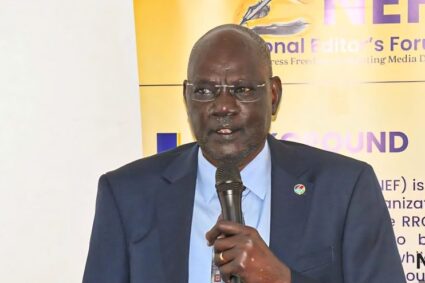
In a strong show of solidarity, civil society leader Edmund Yakani, Executive Director of the Community Empowerment for Progress Organization (CEPO), hailed the Bishops’ message as “bold, timely, and much needed.”
“This is what we have been advocating for. We thank our faith-based leaders, both Christian and Muslim, for stepping forward and demanding accountability from political and military actors. It is a moral and spiritual duty,” said Yakani.
The activist expressed frustration that some influential figures were stalling the President’s attempt to forestall peace in the country.
“Some of our leaders, unfortunately, seek to test their political relevance by sacrificing the lives and livelihoods of our people. Citizens are suffering not only due to violence, but also from floods, hunger, and through limited access to farmland. This is inhumane and unacceptable,” Yakani stated.
Yakani called on religious leaders to revive the KAJICO 3 conference; a well-established, faith-led platform for national dialogue, arguing that it offers a credible, neutral space for moving the country forward.
“The KAJIKO conferences have always been fully led by religious leaders, not politicians. It’s time for KAJIKO RP3 to be revived. Let the spiritual leaders once again design the agenda for peace and place it before the politicians for negotiation,” he said.
Yakani also urged faith leaders to work with stakeholders to support the merger of the Tumaini and AR-ARCSS initiatives into a single, inclusive peace building process aimed at securing credible, non-violent elections in December 2026.
“The upcoming elections is one of the only viable options to transition from violence to peace, but they must be prepared under good enough conditions.We must define and agree upon as South Sudanese at our own table, not imposed by outsiders,” he emphasized.
Citing the words of the late Pope Francis during his 2023 peace pilgrimage to Juba, the Bishops pleaded with South Sudan leaders to turn away from conflict and take up their true role as servants of the people.
“It is time to turn the page,” they said. “Cease the violence. Prove yourselves to be guardians of the Constitution and shepherds of this nation.”
They urged the faithful to remain hopeful, practice forgiveness, and resist despair, calling on all South Sudanese regardless of tribe, religion, or political affiliation to embrace the dream of a peaceful and united country.
“Let this 14th anniversary of independence be a Jubilee Year of Hope,” the statement said. “Let it mark a new dawn of healing, dialogue, and national conversion. Let the guns fall silent and peace flourish.”