




Cautious optimism ahead of Tumaini talks, as government calls for an all-inclusive

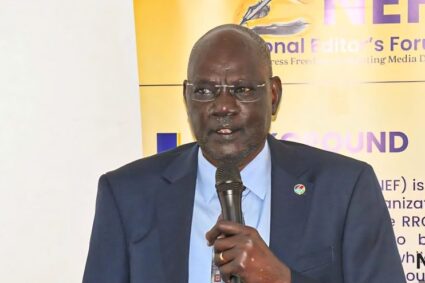
Cabinet Affairs Minister Martin Elia Lomuro said late last week that the government is keen to ensure that the next round of the talks is inclusive of all armed groups
By James Chatim
The Nairobi-led Tumaini talks in Nairobi are expected to resume this week, after delegates took a break for the Christmas and the New Year festivities.
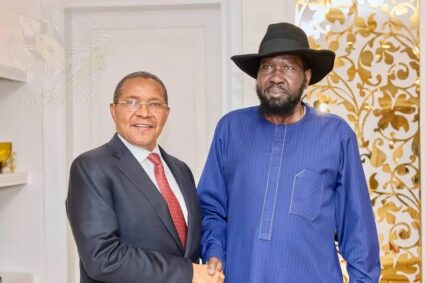
Cabinet Affairs Minister Martin Elia Lomuro said late last week that the government is keen to ensure that the next round of the talks is inclusive of all armed groups. This came after a meeting held at the presidential palace chaired by His Excellency the President of the Republic, Salva Kiir Mayardit, on Friday, to discuss the progress made by the Tumaini peace initiative so far.
According to the Presidential Press Unit, Lomuro stressed on the government’s commitment to inclusiveness, adding that all armed groups must join the Tumaini initiative so that this mechanism can comprehensively address and end all aspects of the conflict in the country.
Cabinet Affairs Minister Dr. Martin Elia Lomuro said the meeting focused on the challenges faced in the last round of talks, adding that the mediators have asked the government negotiating team to return to Nairobi for the final round of talks scheduled for early next week.
Lomuro described Tumaini’s initiative as important in stabilizing the country as it aims to be in line with the 2018 revitalized peace agreement.
The National Salvation Front, a rebel group led by Thomas Cirillo has rejected Tumaini’s invitations to join the talks, while General Simon Gatwech Dual has not indicated a clear position on whether he will join the peace initiative in Nairobi.
Observers at home and abroad are pinning high hopes on the success of the next round of talks, which will pave the way for the start of preparations for elections scheduled for 2026.
Atem Simon, a senior journalist and political analyst, said he expected the negotiations to reopen, given the government’s demand to include all armed movements.
“I expect that in the next round, according to official statements, the government will demand the involvement of all armed groups in the negotiations. This means reopening the negotiations again.”
Atem considered that this casts doubt on the government’s seriousness in moving forward with the talks and signing a final peace agreement, and explained that “the government is trying to escape the pressures it faces from the international and regional community and the Kenyan mediator.”
Atem did not seem optimistic about the parties reaching an agreement in a short time during this round.
Atem stated that the steps taken by the government recently, by changing its entire delegation and forming a new one, is also an indication that the government is not interested in Tumaini.
“The government changed its delegation at the last minute, despite the fact that the previous delegation had made significant progress and succeeded in signing eight protocols with the opposition, and the change in the government delegation is an indication that the government is not interested, or that there is no agreement between its parties on Tumaini, due to its concerns related to the 2018 revitalized agreement.”
Atem warned that prolonging the negotiations might push the Kenyan mediator to withdraw his hand from this file, adding: “This means that we have lost an important country, which has political and economic ties with South Sudan.”
In the same context, Edmund Yakani, the Executive Director of the Community Empowerment for Progress Organization (CEPO), said that the resumption of the Tumaini initiative could be successful if there is flexibility among the negotiating parties. “The resumption of the current peace talks in Tumaini will succeed if the delegates change their positions from rigidity and inflexibility,” he added. “This phase of the peace talks in Tumaini, if it is not handled in the spirit of making concessions, the chances of failure are higher,” he added.
“The resumption of the current peace talks in Tumaini will succeed if the delegates change their positions from rigidity and inflexibility.”