


Dr. Bak: Here is the Cabinet-endorsed economic stabilization reforms

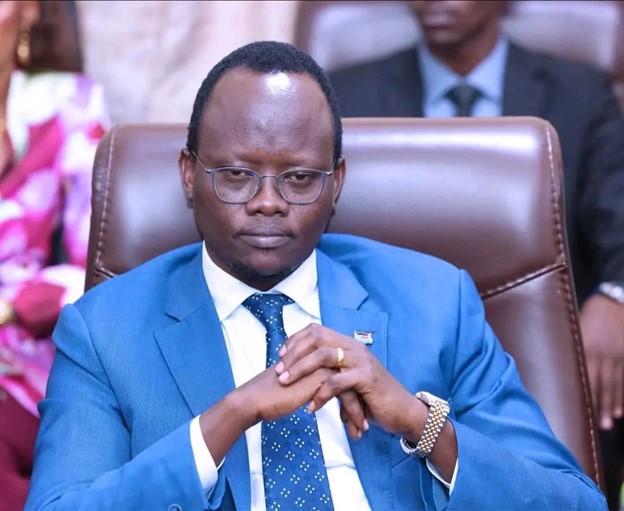
Unveiling the policy endorsed through a resolution of the Council of Ministers, the Finance Minister said cabinet came up with resolutions on how to address issues pertinent to the current economic situation
By Aguok Chok
The government has adopted the Economic Stabilization and Structural Reforms Policy as an official framework to address current economic challenges and restore confidence in the national economy.
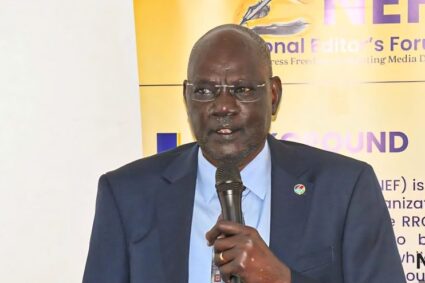
The policy was endorsed through a resolution of the Council of Ministers, Finance Minister Barnaba Bak announced at a press conference on Wednesday.
“My address today follows the Resolution of the Council of Ministers, through which the Government endorsed the Economic Stabilization and Structural Reforms as an official policy framework to guide our collective response to prevailing economic challenges and to reposition the economy toward stability and sustainable growth,” Bak told the press.
He emphasized that the policy reflects collective government ownership and broad institutional input.
“This is a Cabinet-owned policy. It reflects collective deliberations within the Economic Cluster, inputs from key institutions, including the Bank of South Sudan, the South Sudan Revenue Authority, sector ministries, and other relevant authorities,” he said.
Tackling endemic economic challeges
According to the minister, the cabinet reviewed the current economic situation and acknowledged persistent challenges affecting the country.
These include fiscal pressures, inflation, currency instability, and structural imbalances caused mainly by over-dependence on oil revenues and weak domestic production.
In response, the cabinet agreed to move away from fragmented interventions and adopt a coordinated, realistic reform approach.
One of the key pillars of the policy is fiscal discipline and expenditure rationalization. The Minister added that the cabinet approved targeted fiscal adjustments to restore budget credibility while safeguarding stability.
“Government will enforce absolute prioritization of salary payments and essential government operations, including security, peace implementation and elections,” he said.
He added that spending controls will be strengthened, noting that “Payments for non-essential claims, contracts, and expenditures will be limited, and recruitment across government institutions will be temporarily halted, except for clearly justified critical needs.”
On revenue generation, Mr. Bak said the government will focus on strengthening tax governance and expanding non-oil revenue sources.
He outlined measures including oil sector reforms, the introduction of VAT (Value Added Tax), review of EPSA (the Economic Partnership Support Agreements) and SOFA (Status of Forces Agreements) arrangements, and the cancellation of non-statutory tax exemptions.
The policy also prioritizes monetary stability in close coordination with the central bank. “Together with the Bank of South Sudan, we shall work on alignment between fiscal and monetary policy that will address the liquidity-related issues, treasury single account (TSA), FX management and financial sector reforms,” the Minister said.
In addition, the government plans to rationalize institutional and diplomatic expenditures while improving the welfare of diplomatic missions in collaboration with the Ministry of Foreign Affairs and International Cooperation.
To promote long-term growth, the policy places strong emphasis on productive sectors and economic diversification. The Minister said the government will promote a Public-Private Partnership approach to support SMEs and boost sectors such as agriculture, livestock, fisheries, tourism, mining, and agro-processing. Trade facilitation and export promotion will focus on high-potential commodities, including sesame and gum arabic.
In conclusion, the Minister reaffirmed the government’s commitment to implementation.
“The Economic Stabilization and Structural Reforms Policy is a Council of Ministers-endorsed policy framework,” he said, adding that it is designed “to stabilize the economy, protect livelihoods, and lay the foundation for sustainable and inclusive growth.”
Utilities
“Government will enforce absolute prioritization of salary payments and essential government operations, including security, peace implementation and elections,” said Dr. Barnaba Bak, the Minister of Finance.