


Examination Council says removal of minister Awut will not affect marking

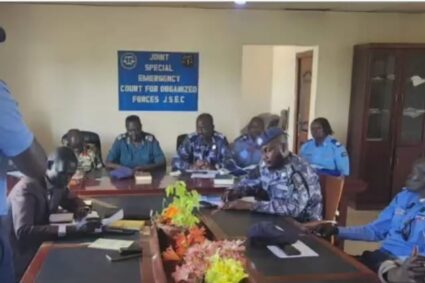
Speaking exclusively to this publication, a supervisor of the markers said the needs of the markers shall be catered for and the program to continue as planned.
By Ajah Jennifer and Binia Elizabeth
An official from the South Sudan examination council has assured the public of the continued progress in exams marking despite the removal of Education Minister Awut Deng Achuil.
This came following the concerns raised by some members of the public on Tuesday about the sacking of the minister.
Speaking to The City Review, Ariik Kuol, the Supervisor of the markers, said the needs of the markers shall be catered for as planned.
He said that all the needs were being met and the process of exam marking was going on smoothly.
“They have been given feeding and all these things, and they are paying for feeding,” he said.
“For 6 days they are being paid SSP 120, 000,” he stated.
He urged the public to desist from spreading false information that would ruin the reputation of the council.
As the first woman to hold the position as Minister of General Education and Instruction in South Sudan, Awut Deng Achuil was notably known for her efforts to reduce the malpractice behaviour that was corrupting the school and students.
She also broke barriers to ensure educational access, particularly for girls and marginalized communities. During her time, an enhanced curriculum was put in place and promoted teacher training programs, ensuring a more structured and effective learning environment.
During her tenure, the ministry had collaborated a lot with global organizations like UNICEF and UNESCO in campaigns that tackled pressing issues such as early marriage, gender-based violence, and the stigma surrounding menstruation.
James Bilal, a South Sudanese Human Rights Activist, acknowledged the contributions of Awut Deng Achuil in the education sector.
He said Awut Deng was a seasoned politician and a passionate advocate for education and she played a decisive role in transforming South Sudan’s education sector, leaving behind a lasting impact that continues to resound.
Bilal said that under Awut’s leadership, key policies were introduced to promote inclusive education, enhance curriculum development, and to strengthen teacher training programs, ensuring a more structured and effective learning environment.
He also said that one of Awut’s most notable achievements was the push for free and compulsory primary education, a policy aimed at leveling the playing field for children from disadvantaged backgrounds.
Bidal further highlighted that during Awut’s administration, there was successful implementation of the country’s first-ever national examinations.
“This milestone marked a major step toward standardizing education, providing learners with structured pathways to higher learning and career opportunities and the introduction of national examinations reinforced the credibility of the education system and was instrumental in paving the way for future educational reforms,” he said.
According to him, the education stakeholders view her removal as a setback, fearing that it could disrupt the ongoing reforms she had tirelessly worked to implement.