


Gov’t, NGOs team up to sensitise South Sudan against child marriage

The Director-General at the National Ministry of Gender, Child and Social Welfare (MGCSW), Regina Ossa Lullo, has called on traditional leaders to make laws that prevent child marriage in their communities.
She said making laws that prevent child marriage in the country is key to reducing the rampant early marriages among teenagers in the country.
“Child marriage violates children’s rights and exposes them to violence, exploitation, and abuse. It affects both girls and boys, as well as the country, ” Ms Lullo said.
The director added that when children are married earlier, they are not only affected but also the whole country. She said when a child is married at an earlier age, she may not be able to take care of the family, including herself.
She made the statement during the chiefs’ conference on the implementation of the Strategic National Action Plan (SNAP) on ending child marriage.
“We are here [as the] national ministry of gender, children, and social welfare, [urging] chiefs and director generals from the states, [that] it is time for us to work together and empower and educate communities on how child marriage can be discouraged in our country,” Director Lullo stressed.
She further added that child marriage ends childhood, and hence it negatively influences children’s rights to education, health, and protection.
Ms Lullo stressed that when a girl’s body is not fully developed, it will negatively affect her during delivery. She said the girl can develop some serious implications that will continue to affect her.
Need to tweak culture
Shruti Upadhyay, Gender Specialist, United Nations Population Funds (UNFPA), said it was high time for the country to stand up and fight for children’s rights by protecting them against child marriage.
“It is time to think about what can be done in order to address and eradicate child marriage in our communities,” Shruti said.
“I think [it is important] to come together and listen to what can be done to address the challenges facing the implementation of end child,” the UNFPA gender specialist said.
Shruti said bringing the traditional leaders together and exchanging ideas on the dangers of child marriage, would help to eradicate a huge percentage of the vice in the country.
“When we talk of ending child marriage, I think traditional chiefs are the right people to stand firm and contribute greatly to eradicating early child marriage because they are the custodians and leaders of culture and tradition.”
However, she reiterated UNFPA’s commitment to supporting and ensuring the implementation of the Strategic National Action Plan on the elimination of child marriage by 2030.
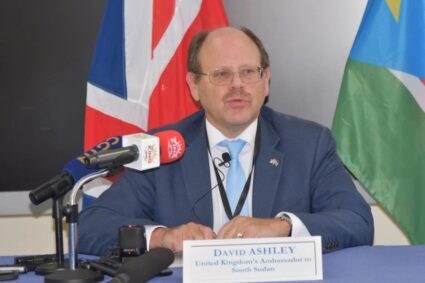
Joachim Waern, Swedish Ambassador to South Sudan, lauded the country’s gender ministry and its partners’ commitment towards the elimination of child marriage in the country.
He called on chiefs from various communities in the country to protect and discourage earlier marriages in the country.
The three-day Chief’s conference on the implementation of the strategic national action plan (SNAP) on ending child marriage was organised by the Ministry of Gender, Child and Social Welfare and supported by UNFPA and other local organisations.
The conference attracted all the traditional chiefs and directors’ generals of state ministries of GCSWs from ten states and three administrative areas.
According to the book titled “End Child Marriage in South Sudan by 2030”, defined child marriage as a marriage of a girl or boy before the age of 18 and refers to both formal marriages and informal unions in which children under the age of 18 live with a partner as if married.