



Can you tell us a bit about yourself—your background your journey into leadership?
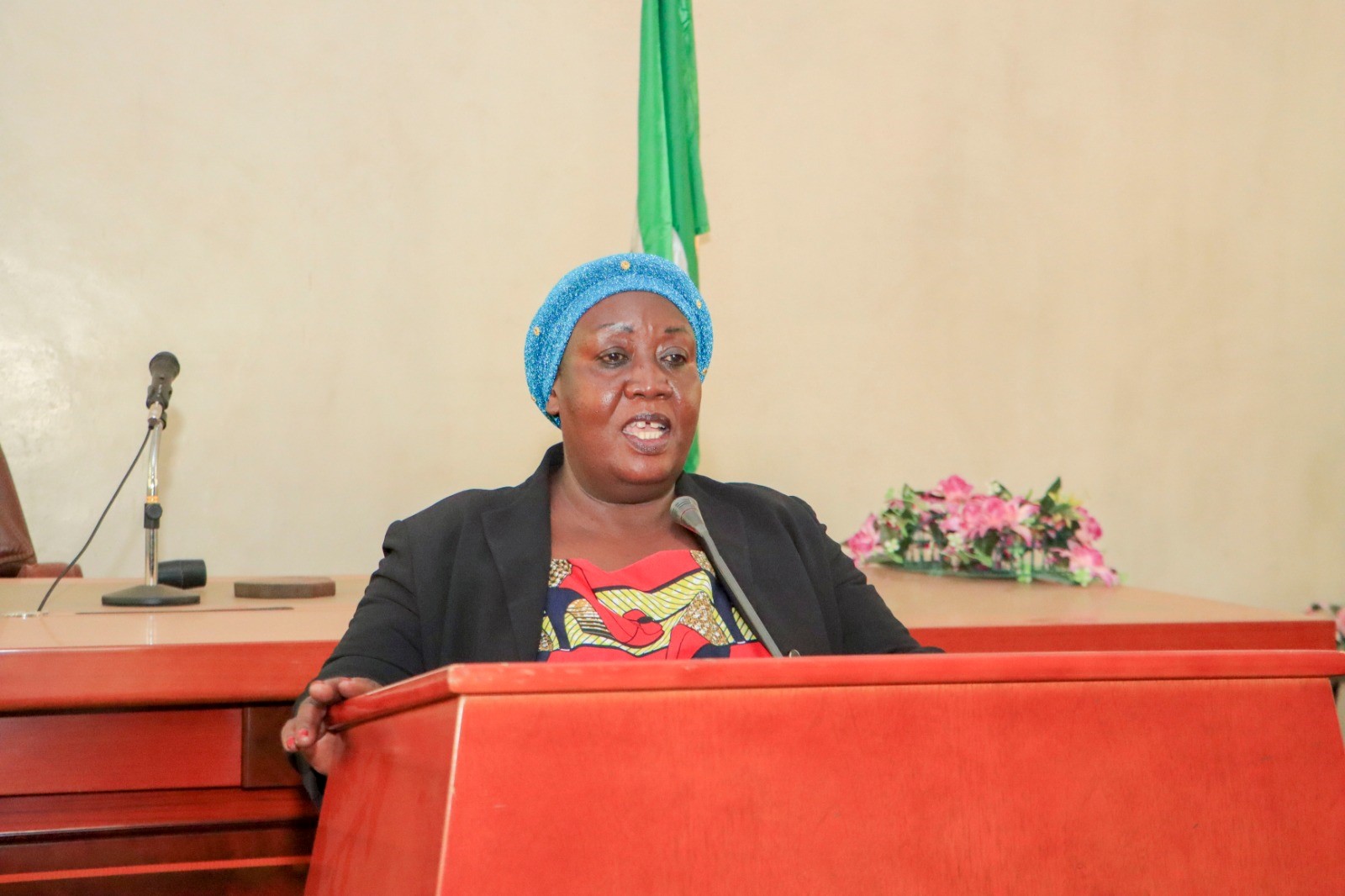
My name is Hon. Sadia Lorna Anthony, a Member of Parliament representing Yei River State at the Central Equatoria Legislative Assembly. I began my career as a teacher and I have since continued that path to the current level, where I double up politics with lecturing at St. Mary’s University College in Juba as well as at Destiny College, formerly Kampala University. I also worked with NGOs and later joined government as a civil servant. My political journey began in 2016 when Yei River was confirmed as one of the 32 states. I was appointed Minister of Education after the position became vacant, and later served as Minister of Finance. Though I never planned to be in politics, my educational background and commitment to service made me accept the call to leadership.
What early experiences or influences shaped your values and desire to serve?
As a teacher, I saw many children dropping out of school, which inspired me to act. I was deeply influenced by Agnes Roba, a courageous woman who mentored me and spoke to me like a mother. Her wisdom and example shaped my values and desire to serve. I also drew inspiration from the stories of South Sudanese women, which strengthened my resolve to uplift others.
How did your community, family, or mentors support or challenge your path into leadership?
I was supported by Mary Apai and Agnes Roba, both strong women who guided me. Mary Apai, a politician and fighter, showed me that women can lead even in difficult circumstances. She fought with a gun, while I chose to fight ignorance with chalk and education. Their mentorship gave me courage to step into leadership with confidence.
What values guide you in your work and leadership?
I believe in self-respect because when you respect yourself, others will respect you. I value being open-minded, teamwork, vision, and principled leadership. Understanding the people you work with is essential to effective leadership.
How did your journey into political or public leadership begin?
My journey began when I was appointed Minister of Education in Yei River State after Mary Apai was involved in an accident. Though hesitant at first, I accepted the role, and that marked the beginning of my political career.
What positions or responsibilities have you held so far?
I have led in many capacities: as a teacher, tutor, and principal in teacher training colleges in Aweil, Kajo Keji, and Yei. I chaired South Sudanese women’s groups in Uganda while in refugee camps. In government, I served as Minister of Education, later as Minister of Finance, and now as a Member of Parliament representing Yei River.
What key achievements are you most proud of?

Hon. Sadia Lorna Anthony, Member of Parliament Representing Yei County.
I am proud of my students, especially the young women I trained who now hold high offices. Seeing them succeed gives me joy. In Aweil, I worked to increase the number of girls in schools, and today many of them are thriving professionals.
How has your leadership contributed to your community, especially for women and youth?
I opened a school and an orphanage in my village in Yei, welcoming vulnerable children. I also started an organization called Support a Child and a Woman. Through lobbying, I secured scholarships for orphans to attend boarding schools. These initiatives reflect my commitment to education and community empowerment.
With elections approaching, what role do you see women playing in shaping South Sudan’s future?
Women are rising in politics thanks to awareness and confidence-building. In the past, women were confined to the cooking stone/kitchen, but today they are contesting seats and shaping the nation’s future. Women are the most hardworking in South Sudan, and I believe they will play a central role in achieving peace and development.
Are you planning to contest for elective positions—and what motivates you?
Yes, I plan to contest. My motivation is to prove that women can lead not just under the 35% quota, but equally alongside men. I want to compete at the level of 65%, showing that women are capable of holding top positions.
What does the 35% women’s quota mean to you personally and politically?
It represents responsibility and struggle. Women fought hard for this quota, and now it is our duty to fulfill it and prove that we can deliver.
What challenges have you faced as a woman in leadership or politics, and how have you navigated them?
Challenges include financial limitations, cultural norms, and exclusion from decision-making spaces often dominated by men. Meetings are sometimes held late at night in hotels, making it difficult for women to participate. To overcome these challenges, I believe in dialogue, sharing experiences, and sticking to the constitution to ensure women’s rights are respected.
How would you describe your leadership style?
I am principled, collaborative, and self-driven. I do not need supervision to complete my work. I always finish tasks on time.
What makes your approach to leadership unique and effective?
I welcome new ideas, share knowledge, and bring people together. I value research and innovation, which help me find solutions and improve my work.
How do you stay connected to the people you represent?
I regularly travel home even on risky roads, to meet my physically. Staying connected is essential to representation.
How do you balance leadership responsibilities with personal life and wellbeing?
It is not easy, but I manage through time management. I follow a timetable that balances university lecturing, office work, family responsibilities, and party activities.
What is your vision for South Sudan—especially regarding peace, women’s empowerment, and development?
I envision a peaceful South Sudan free from tribalism, where women support each other as sisters. If we unite, we can build a better nation where everyone can live and sleep peacefully.
What message do you have for South Sudanese women and girls who are looking up to you?
Knowledge is power. There is no age limit to learning. Education gives you the strength to lead and the ability to serve your country effectively.
What would you like voters to know about you and your leadership values?
I am confident, capable, and skilled in communication and lobbying. I have a Godly heart and believe in peaceful coexistence. I am ready to lead and deliver for my people.
What gives you hope for South Sudan’s future?
The growing number of women in leadership and the increasing enrollment of girls in schools give me hope. With support from organizations like Men4Women, South Sudan’s future is bright
Utilities
“My motivation is to prove that women can lead not just under the 35% quota, but equally alongside men. I want to compete at the level of 65%.”Hon. Sadia Lorna Anthony, Member of Parliament Representing Yei County.