




By Agar Mayor Gai-Makoon
Conflict has affected South Sudan from many fronts. And healthcare sector is not an exception. Hospitals bombed and burnt to ashes, lack of roads to ease medical aid accessibility to vulnerable population, and murder of health workers are common cases since December 2013. And beyond those core problems inflicted by the conflict, low pay, medical malpractice and poor leadership can be clearly observed.
Even though these problems seem to be cloaked by the shadow of conflict, their claws have stationed in one place, the wheels of progress for the healthcare sector. And undermining them would mean a wrong diagnosis of the healthcare problem. And indeed, providing the appropriate remedy can be rendered difficult. It is in the great books of life, more so, the medical wisdom that in order to find a solution, one must always strive to first identify the problem by its true calling.
Until South Sudan healthcare sector walks in this path of experience and inherent cognition, the health challenges will persist and continue to slow the progress of our nation. Consequently, I am very much afraid that without quick remedy for our current health challenges, South Sudan rams in a direction of a stabilized failure—where it would be even more difficult for anyone to provide change in this particular sector. Perhaps, we must rise against and above this challenge now, not later and not even wait for absolute peace and stability to take center stage. South Sudanese lives cannot wait. The tides are large and powerful, but we must rise above them because South Sudan has the divine authority to determine its own better health future. And this clearly defines the rationale behind the immense sacrifices made for freedom and sovereignty of this country. South Sudan needed freedom and independence so that they could develop a strong healthcare system with their own knowledge and resources. And indeed, South Sudan is now sovereign and the overseer of its own health affairs. What then, is the problem? I will examine the possible perspectives for three groups of people in South Sudan on this particular problem—the healthcare problem e.g. The health personnel, politicians and the citizens of South Sudan.
The health personnel perspective
South Sudan has produced a considerably good number of physicians, pharmacists, nurses and clinical health officers both within and outside the country over the recent years. Though the doctor to patient ratio is still high (1:65,000), and far below the World Health Organization’s recommended ratio of 1: 1000, we can still appreciate the progress. South Sudan continues to produce more medical personnel every year. While there is that progress, the overall health sector rating keeps dropping. It keeps getting worse every year. The medical personnel attributes this deteriorating health state to lack of health infrastructure for instance, no health facilities, no health information systems and more importantly, no medical equipment. These factors have rendered the physicians and all other medical personnel helpless to the patients. This gives doctors the confidence and the perspective that they are in an environment that does not allow them perform their service.
Politician perspective
South Sudan politicians believe that anything to do with health is for the doctors to handle. This is very true, but what they do not understand is that every political party must always have its own medical experts who can help the party to formulate health models that align with the party’s overall plan for the nation. Our parties have members of medical background, but they are not making the rightful use of their medical personnel. And this is why there is no single political party in South Sudan that has a health reform, or health quality improvement model. The medical title is only helpful when giving out government seats. Our political parties have got to change this trend and move in the direction of change. South Sudan needs political parties that have solutions to their health problems, not parties that have no health agenda for them.
Citizen perspective
South Sudan citizenry is the most resilient and never complaining one in the world. They have so much trust in their government. But over the recent years of conflict and corruption, it seems they are beginning to see clearly. When I saw people complaining about the bombed hospital in Fangak county and how it was helping the residents there, it gave me an understanding that the South Sudanese people know what they want, but they find it difficult to make it heard. This mindset must however, never be taken advantage of by the government to stay back and do nothing. Instead, the government should fulfil the social needs of South Sudanese even when they have not asked. South Sudanese people appreciate those who work within their obligations even when they are not informed. It is time to awaken our spirits and do the needful.
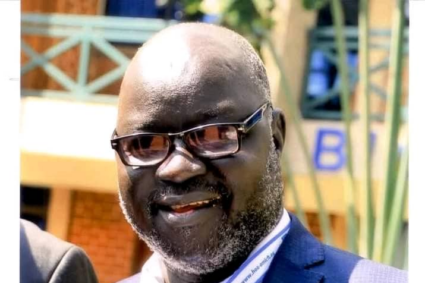
The writer has a background in sociopolitical philosophy. He currently studies medicine at Ain Shams university, Egypt. He can be reached on +201129107334, or thieng.thiengwada@gmail.com.