
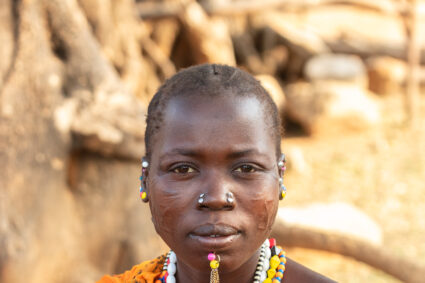


In an exclusive interview with The City Review, the refugees expressed the deep challenges they face at the camp, including acute food shortages, inadequate medical care and limited education
By Binia Elizabeth
Who is a Refugee?
A refugee is a person who has been forced to flee their country due to war, persecution, or violence. Often with little more than the clothes on their backs, refugees seek safety and stability in foreign lands, hoping for a fresh start.
Background on Kiryandongo Refugee Settlement
Established in the 1990s and reactivated in 2014 to accommodate the influx of South Sudanese fleeing civil war, the Kiryandongo Refugee Settlement in Uganda’s Kiryandongo District currently hosts over 80,000 South Sudanese refugees. While it was once seen as a place of hope, the camp is now grappling with a deepening humanitarian crisis.
Dwindling Food and Deepening Desperation

In exclusive interviews with The City Review, South Sudanese refugees at Kiryandongo described growing hardships—particularly food insecurity, inadequate healthcare, and overcrowded schools.
Juan Monica, who has lived at the camp since 2014, recalls how the early years brought relatively sufficient food aid. However, the situation drastically changed with the recent influx of Sudanese refugees since 2023.
“We used to receive enough food when we arrived,” she explained. “But now, the portions have been drastically reduced due to the overwhelming numbers.”
To cope, the World Food Programme (WFP) introduced the Vulnerability-Based Ration Allocation system, categorizing refugees into three groups:
- Category 1: Highly Vulnerable
- Category 2: Moderately Vulnerable
- Category 3: Self-sufficient
Many long-term residents like Juan have now been reclassified as self-sufficient and subsequently cut off from food assistance—even though they remain unemployed and unable to sustain themselves.
“We depend on small-scale farming,” she said. “But even that has become impossible. The land we relied on has been subdivided and handed over to newer arrivals. What remains is too little to sustain our families.”
Education Under Strain
Another major concern is the education sector within the settlement. Refugees lamented the deteriorating quality of learning due to overcrowding, limited resources, and unqualified staff.
Public schools meant to serve thousands are bursting at the seams, with up to 3,000 pupils in some primary schools.
“There aren’t enough desks or teachers,” one parent said. “Four to five children share one desk, and despite being government schools, fees are charged—fees we cannot afford.”
Crime, Insecurity, and Sexual Violence on the Rise
Wel Manyock, another refugee, spoke of a worrying increase in crime within the settlement.
“Poverty, idleness, and unemployment are pushing young people into theft and violence,” he said. “People avoid moving after 7 p.m. because phones, food, and clothes are often stolen.”
More disturbingly, he noted a rise in rape cases, adding, “Some of these issues are being addressed by the Ugandan police, but the root cause is desperation.”
Crumbling Health Services

South Sudanese refugees wait in the queue to access medical services. [Photo: Courtesy]
Access to healthcare is another persistent challenge. Refugees rely heavily on Panyadoli Health Centre III, but the facility is grossly overstretched.
“It’s too small for our growing population,” said Kaku Wininne, a student waiting for treatment. “The bureaucracy delays emergency care, and when drugs run out, we are told to buy from private clinics. But where do we get the money?”
For serious cases, patients must be referred to larger hospitals in Kampala or Gulu—far and often unreachable for the average refugee.
Rising Numbers, Shrinking Resources

According to the UNHCR, an estimated 250 Sudanese refugees arrive at the Kiryandongo Camp daily, fleeing war and instability. Local leaders fear that such numbers will continue to strain already stretched resources.
With basic needs unmet, South Sudanese refugees are appealing to their government, international partners, and humanitarian agencies for urgent intervention.
The Crisis Spreads: Kakuma Camp in Kenya
The crisis is not confined to Uganda. In February, South Sudanese refugees in Kenya’s Kakuma Refugee Camp staged protests after going five days without water.
“There are no proper health services. No food. No water. That’s why we protested,” said Madit Jok, a refugee in Kakuma.
The situation worsened after major donors like the United States cut funding, compounding the refugees’ sense of abandonment.
A Cry for Help
South Sudanese refugees, whether in Uganda or Kenya, continue to endure dehumanizing conditions. Their plea is simple: food, safety, education, and dignity. As the humanitarian crisis deepens, they look to their leaders and global allies not for pity, but for action.
Call to Action: Beyond Survival, Restoring Dignity
The plight of South Sudanese refugees at Kiryandongo and Kakuma is not just a humanitarian concern, it is a test of our collective humanity. These are not merely statistics; they are children, mothers, students, and elders whose lives have been upended by war and worsened by neglect.
Governments, development partners, humanitarian agencies, and civil society must act swiftly and decisively. Food security must be restored. Access to education and healthcare must be expanded. Refugee policies must be revisited to ensure they reflect both urgency and compassion.
Most importantly, the root causes of displacement—conflict, instability, and poor governance in South Sudan, must be addressed if we are ever to break this cycle of suffering.
Let this not be another forgotten crisis. Let this be the moment we choose to listen, respond, and restore dignity to those who have already lost so much.
“The land we relied on has been subdivided and handed over to newer arrivals. What remains is too little to sustain our families,” said a refugee at the Kyandongo camp, located in Bweyale town.