



Let’s go digital, it is the pathway to convenient, modern banking

By Ajith Ajith Pioth
The minister of Finance and Economic Planning, Dr. Marial Dongrin, recently raised concerns on the issue of liquidity crisis, saying: “We have managed to pay salaries over the past seven months without fail, but that money goes into the account without cash. So, getting cash is the biggest problem.”
This, therefore, pegs the question: What’s a liquidity crisis? What causes it? What are the consequences? What is the solution? And why can’t we adopt a cashless economy? A liquidity crisis is an economic phenomenon where a business, or even an economy as a whole, experiences insolvency. This is a situation where a business or a financial system runs short of cash or assets that can be easily converted into cash. The inability to meet financial obligations such as payroll, debts, and other immediate short-term liabilities, is what is generally referred to as a liquidity crisis. What causes it? Well, many factors abound: including but not limited to economic downturns or recessions, market shocks and panics, lack of deposit culture, higher amount of bad loans, social impediment to cashless economy, lack of trust in the banks, poor financial management, especially the receivables and misjudgments or the wrong anticipation of the economic situation, among others.
What are the consequences?
Civil servants, workers and businesses are the engines of the economy. When the system fails to pay them plus other immediate short-term liabilities, especially in a cash-based economy like South Sudan’s, it overhauls the entire workings of the economy by default: businesses close, unemployment increases, and consumption declines. It makes the already struggling economy worse. It leads to increased borrowing costs, reduced economic activity, asset devaluation, rampant brokenness, a sharp drop in both demand and supply, leading to serious financial and economic crisis.
What is the solution?
There are many factors that contribute to consolidating a resistance to the liquidity crisis. In addition to the well-known mechanisms such as building dependable cash reserves (by setting aside a portion of national revenue), ensuring a clear, structured and closely monitored cash flow, formulating a balanced expenditure approach or a nuanced pre-financing, rather, having a healthy economic trajectory or dynamics, well designed contingent plans to absorb market shocks in case of an unexpected occurrence, building trust and confidence in the financial institutions such as the commercial banks for the general public to cooperate, reviewing the reserves ratio like what the governor of the Bank of South Sudan, Honorable Dr Addis Ababa, did yesterday, encouraging savings and deposit culture, and transitioning to a cashless economy which the former governor, Honorable Dr James Alic Garang, strongly advocated for, all these, can help us overcome the liquidity problem. Perhaps, once and for all.
Why can’t we adopt a cashless economy?
For the context, a cashless economy is an economy where transactions are done digitally, through Mobile phones, online banking, and credit cards. It is more convenient, efficient, and safer than the cash-based economy. A cashless economy helps us reduce the liquidity crisis such as the one unfolding currently. On a serious note, though, insolvency only affects physical money. It doesn’t affect digital money. Imagine everyone with a Momo account. What can stop transactions? In a cashless society, one that is highly cashless, you don’t experience shortage of cash and you don’t necessarily have to move around Juba Town, Konyokonyo, or Custom carrying a bulky and heavy bag of money and risk thugs robbing your hard earned money.
No. You just move innocently with your phone or credit card, carrying millions of Pounds, go to any shop of your choice, and do your transactions without much hassle. I bet, this is a more efficient and convenient way for you.
With great technological advancements, the liquidity crisis should no longer pose a fiscal threat in the 21st century. We are not in the 60s or 70s. We are in 2025 and should catch up with the modern economy, pretty much like every other country is now doing including our closest neighbors, Uganda and Kenya. We should have only a small portion of money in cash, probably 30%. That’s why the former governor of the Bank of South Sudan, Dr James Alic Garang, advocated strongly for the digitalization of the banking system. It is to avoid the insolvent hits that are quite frequent in non- diversified economies like South Sudan’s. Digital banking is now the future. Of course, for various reasons, we are still required to maintain real liquidity, but we can do that with both our local, hard currencies. Let’s go digital, folks.
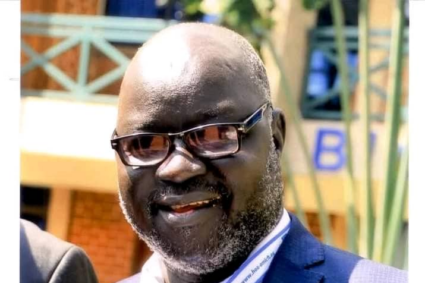
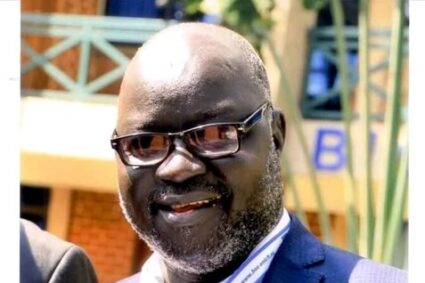
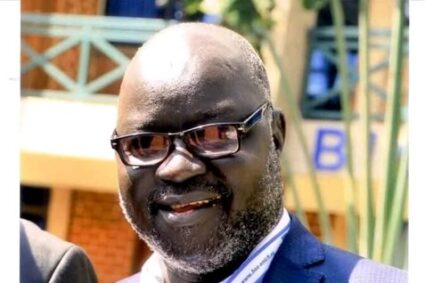
Ajith Ajith Pioth is a South Sudanese citizen with interest in banking and economic matters.