




Name, shame violence perpetrators, Mundari Community told

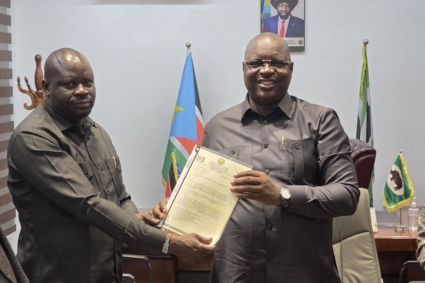
The Governor of Central Equatoria State has demanded that the names of people stoking community conflict be revealed during the Mundari Community Peace Conference in Juba.
Emmanuel Adil Anthony made the remark at the start of the conference initiated by the church leaders on Tuesday to review the resolutions and recommendations of previous conferences held to design a roadmap to end the Mundari Community’s conflict.
In order to minimise issues in implementation, the governor stated that the duty of executing the conference’s resolution should not be assigned to only one body, such as the state government or the Terekaka County commissioner.
“Let us clearly identify who should implement what resolution or recommendation the conference may resolve because there will be accountability.”
“Because if you generalise without resolving concerns with the state, the community will be faulted, and the commissioner will be blamed for the community’s problems. As a result, we all have a part to play.”
To avoid confrontation, Adil urged the delegates not to focus on discussing the pain caused by the long conflict in the Mundari community, and instead to use their experiences of the community’s pain to come up with concrete solutions that will bring change to the community and the State of Central Equatoria as a whole.
Governor argued that the government of Central Equatoria had wasted a lot of money to hold the conference instead of directing it to the development programs in Terekaka County.
“We’re looking for a way to resolve a problem.” We hold one conference here and another at a different location. Let us devise a new method so that we can announce that if money is being gathered for the citizens, it would be used to build schools, hospitals, and roads.”
“If you know the people, don’t generalise everyone, and if a politician X or Y is dividing people, make it known so that more Mundari carnage can be avoided.”
Archbishop Dr Paul Yugusuk of the episcopal church of South Sudan, who chairs the church leaders’ peace initiative for Mundari Community Peace and Reconciliation, said the church has held 18 meetings with various Mundari Community stakeholders, all of whom were asking for peace.
Despite the decisions and recommendations made by the several conferences held since 2017 to resolve the community’s disagreement, killings and conflict have continued in Terekaka County.
Yugusuk added that the objective of the three-day conference—which was organised by church leaders and partners— is to ratify the previous conference’s resolutions and recommendations, which were not implemented due to a lack of a plan of action.
“The Mundari Community dispute has killed our people, brought hatred, and killed many youths,” Archbishop Yugusuk remarked.
Putting past rest
The Commissioner of Terekaka County, James Lino Malou, asked the Mundari community to embrace peace, stating that without it, the community will not be regarded as responsible.
“Today, let each of us question ourselves why we are killing ourselves as Mundari, and we should be ashamed of ourselves as a Mundari community because [when] people fight in other counties, their fights do not last more than five years like ours because they realise they are brothers.”
Commissioner Lino implored, “Let us alter our hearts and realise that we need to change our hearts so that we can return to peace.”
Lino stated he met the leaders of Mundari cattle herders from various cattle camps in Terekaka County, and that all of the payams briefed him that the people who initiated the dispute now welcome peace and will embrace it.
Gerald Francis, the Minister of Peacebuilding of Central Equatoria State, said that pursuing economic growth and development is a crucial tool for opening and establishing post-war communities on shaky grounds where the scars of conflicts are tested would lessen the occurrence of violence.
“As we gather here, we must be focused on the wellbeing of our people and their livelihoods. We should handle with commitment and sincerity the issues that tear us apart to construct our communities,” he said.
“Therefore we need to be reminded that peacebuilding and reconciliation begin with confronting and ensuring redress of wrong and violence committed at the historical juncture of our society,” said Francis.
During the three-day conference, Geeth Pious, UNMISS head of field office in Juba, spoke on behalf of the partners who supported the peace initiative and challenged the Mundari Community to rise up and identify what was dividing them as a community.
She urged them to articulate what they believe is best for the community in order to break the cycle of violence, and she stated that UNMISS is ready to support the community in achieving relative peace as partners.
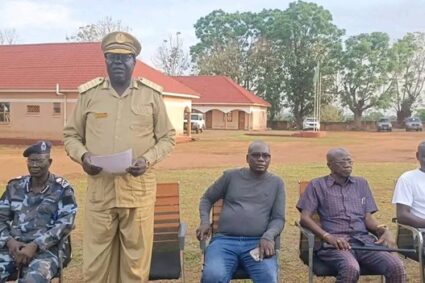
Delegates from all of Terekaka’s Payams attended the meeting, including chiefs, youths, religious leaders from the county, intellectuals, politicians, and representatives from other communities in Central Equatoria State.