







By Samuel Yuang
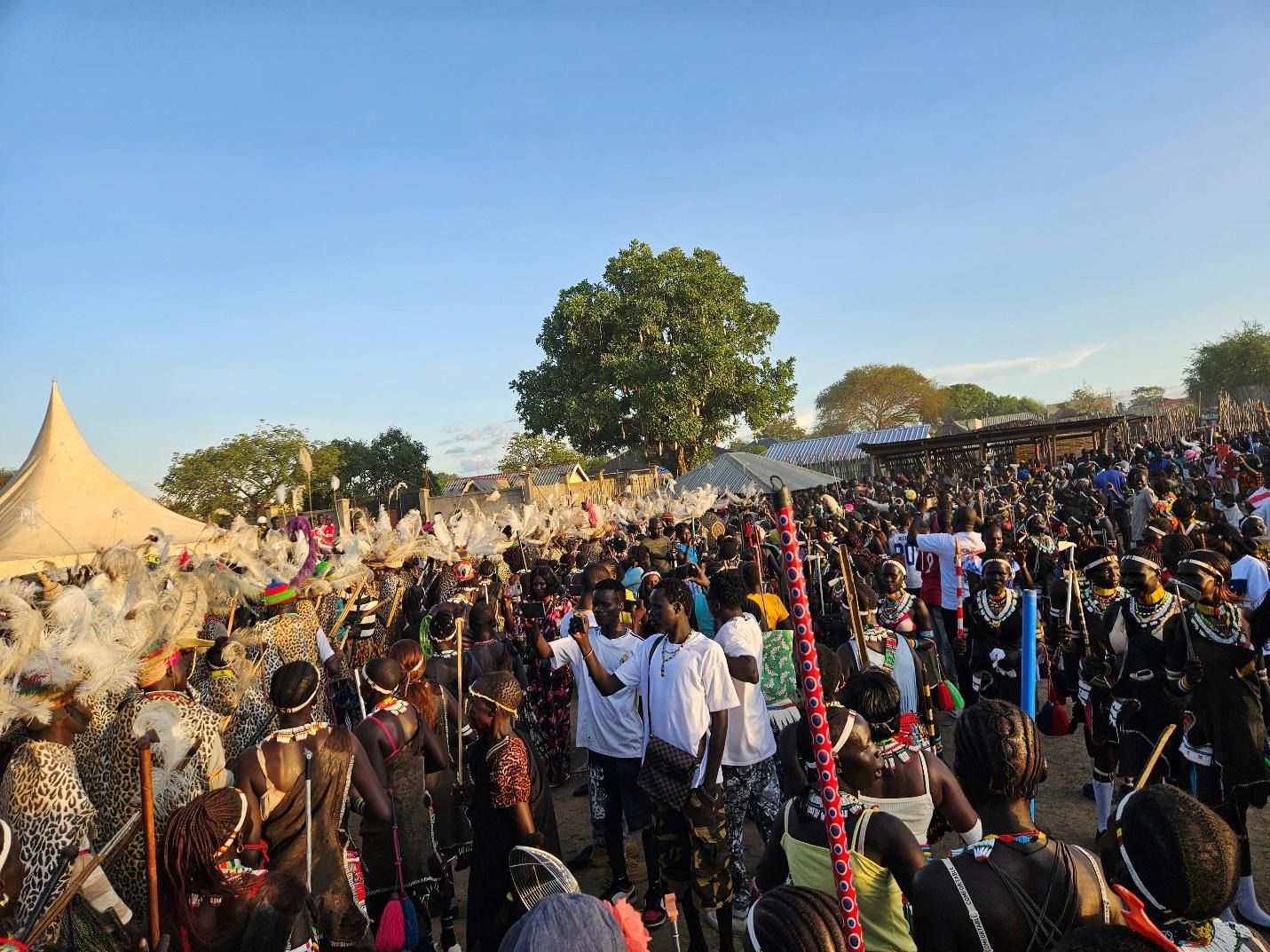
A vibrant cultural celebration filled with song, dance, and tradition unfolded in the Peri community as hundreds gathered to witness the initiation of youth into a group known as Alagura.
The event, held on the outskirts of Juba, brought together people of all ages in a powerful display of unity and heritage. Dressed in traditional attire adorned with colorful beads and ornaments, the initiates proudly marched through the crowd, marking their transition into a new stage of responsibility and identity within the community.
The Alagura group includes young men aged between 20 and 30, following the earlier age-set of elders who range from 50 to 60 years.
The structured age-group system reflects a long-standing cultural practice that strengthens social order, mentorship, and leadership within the Peri community.
Explaining the system, a community elder identified as Onyango said age groups are not changed based strictly on time, but on performance and responsibility.
“Traditionally, a new age group may emerge within five to ten years. However, if the group serves the community well, there is no reason to replace them,” he said.
He added that strong age groups can remain in place for generations. “When they protect cattle from enemies, provide food, and maintain peace, they can even stay for up to 100 years without being changed,” Onyango explained.
However, he noted that failure to meet expectations leads to immediate replacement. “If an age group fails to protect the people, cannot provide food, and the community suffers hunger or insecurity, they are replaced right away by another group,” he said.
Youth participants expressed pride and excitement as they took part in the ceremony.
One initiate, Jino Omba of the Alagura group, shared his feelings about the milestone. “This initiation means everything to me. It is a call to serve, protect, and provide for my people.
We are ready to take responsibility and prove ourselves to the community,” he said.
Among those who attended was Angines Akok, a young lady who joined the celebrations to cheer and dance in support of the newly initiated group. She described the moment as joyful and meaningful.
“We came to celebrate and support our brothers. Seeing them step into this role makes us proud, and the dancing is our way of encouraging them,” she said.
The ceremony concluded with traditional dances, communal feasting, and blessings from elders, symbolizing unity and continuity across generations in the Peri community.