


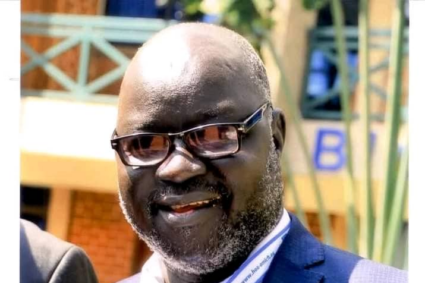

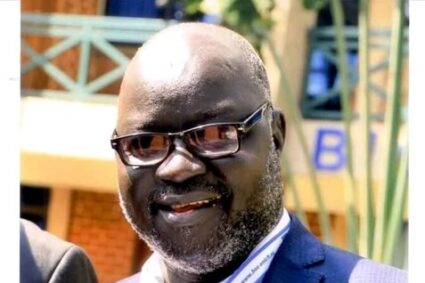

With Yaba Odongo Odoyo
This week, I read a United Nations (UN) report with deep concern about the ongoing conflict in neighboring Sudan. The unrest, now intensifying, is not only destabilizing Sudan but also severely impacting South Sudan’s own fragile economy and security. While such reports may no longer be novel, the implications remain urgent and far-reaching. Unless this conflict is brought under control, South Sudan—and indeed the wider region—stands to suffer further disruption.
There is no disputing the truth: the war in Sudan is escalating instability in South Sudan, exacerbating an already fragile humanitarian and economic landscape. The conflict has triggered an influx of refugees, increased violence along the border, and raised the threat of cross-border clashes. These pressures are layered atop South Sudan’s own political volatility and the slow implementation of its 2018 peace agreement.
A report released earlier this month, titled “Sudan War Fuels Flow of Advanced Arms to South Sudan,” highlights a particularly troubling dimension of the crisis. It states that the conflict in Sudan is contributing to the influx of looted and sophisticated weaponry into South Sudan, violating the existing UN arms embargo and jeopardizing the nation’s tenuous peace.
According to the UN Panel of Experts, South Sudanese security services began seizing advanced Turkish-made rifles with scopes from civilians and cattle keepers in late 2024. These weapons—including models such as the BRG 55, HUSAN Arms MKA 556, and UTAS Defence rifles—represent a significant escalation from the region’s typical armaments. The weapons have been traced to stockpiles looted by Sudan’s paramilitary Rapid Support Forces (RSF) in Khartoum.
These arms are reportedly being smuggled into South Sudan through porous borders, especially into Northern Bahr el-Ghazal state and the contested Abyei region. The trade forms part of a two-way illicit economy where individuals with political or military connections exchange weapons and looted goods for fuel and food—commodities that, in turn, help sustain the Sudanese conflict.
This covert arms trafficking stands in stark contrast to the formal relations between the two nations. Despite the tensions, Sudan and South Sudan have maintained cooperative ties, largely driven by their mutual dependence on oil exports. South Sudan’s oil is transported via a pipeline that runs through Sudan. In fact, General Abdel-Fattah al-Burhan of Sudan visited Juba twice in late 2024 to discuss oil, trade, and security. Sudan also played a mediating role in helping Juba and an opposition leader reach a peace deal in February 2025, and negotiated a humanitarian corridor for aid delivery.
However, this fragile diplomacy was severely tested in January 2025 after the Sudanese Armed Forces recaptured Wad Madani from the RSF. Videos surfaced online showing the alleged execution of South Sudanese men accused of supporting the RSF, triggering violent anti-Sudanese protests across South Sudan. While the government strongly condemned the killings as acts of terrorism, it also took decisive steps to protect Sudanese nationals and their property—actions widely commended by international observers.
Further tensions erupted in December 2024 when South Sudan announced the results of a decade-old referendum on the disputed Abyei region, a move the UN experts say could provoke Khartoum and complicate diplomatic efforts.
The UN Panel of Experts, operating under a Security Council mandate, monitors the arms embargo imposed on South Sudan in 2018. Its role is to investigate violations and report back to the Council. This latest report warns that the influx of sophisticated weapons is intensifying local conflicts, increasing civilian casualties, and threatening the implementation of the 2018 peace deal. It concludes that the war in Sudan is no longer a localized issue—it is actively exporting violence and instability across the region.
While conflict looms large, other international bodies continue their support for South Sudan’s development. The World Health Organization (WHO), in its 2025 second-quarter report, highlighted the critical role of partnerships and collaboration in maintaining health services during multiple, overlapping emergencies. Their efforts are a testament to resilience in the face of adversity.
During the quarter, WHO South Sudan hosted a high-level visit by Dr. Chikwe Ihekweazu, former Acting WHO Regional Director for Africa. His visit aimed to strengthen health cooperation and emergency support. Dr. Ihekweazu met with key stakeholders including the former Acting Minister of Health, James Hoth Mai, as well as humanitarian partners and donors. This visit underscored the value of collaboration in addressing urgent health needs.
The same period marked important milestones in the nation’s health sector. South Sudan commemorated African Vaccination Week and World Health Day—two opportunities to reflect on progress and challenges in the pursuit of health equity. Key highlights included:
- WHO’s leadership in combating disease outbreaks, including cholera and Mpox
- Strengthening of national health systems, including the signing of the Health Systems Strengthening Component Output Agreement under the Health Sector Transformation Project (HSTP)
- Introduction of key vaccines, such as the Pneumococcal Conjugate Vaccine (PCV) and the Rotavirus vaccine
- Delivery of 123 metric tons of essential medical supplies to priority response areas
- Renewed commitment to eradicating vaccine-derived polio virus type 2 (cVDPV2)
- Efforts to align with International Health Regulations and strengthen disease surveillance
- Enhanced data systems to support evidence-based decision-making
- Ongoing initiatives targeting HIV/AIDS prevention and treatment
These health interventions provide a glimmer of hope amidst the turmoil. They show that even as South Sudan faces growing regional threats, progress is still possible when international solidarity meets local commitment.
Regional peace is not merely a political objective—it is the foundation upon which sustainable economic growth is built. Without stability, investments shrink, livelihoods vanish, and nations remain trapped in cycles of aid dependency. But when peace is pursued earnestly and upheld by both local leaders and the international community, it becomes a milestone from which genuine progress can emerge.
Yaba (Jaduong) Odongo Odoyo is a leading commentator, writer and established Editor with long standing career in journalism and media industry internationally. The comments and insight shared are his own. You can contact him at +211921351878, +254795226883 or e-mail: odoyo2002@gmail.com.