
Renewed hope as 536 inmates graduate from Juba National Prison Vocational Training Centre

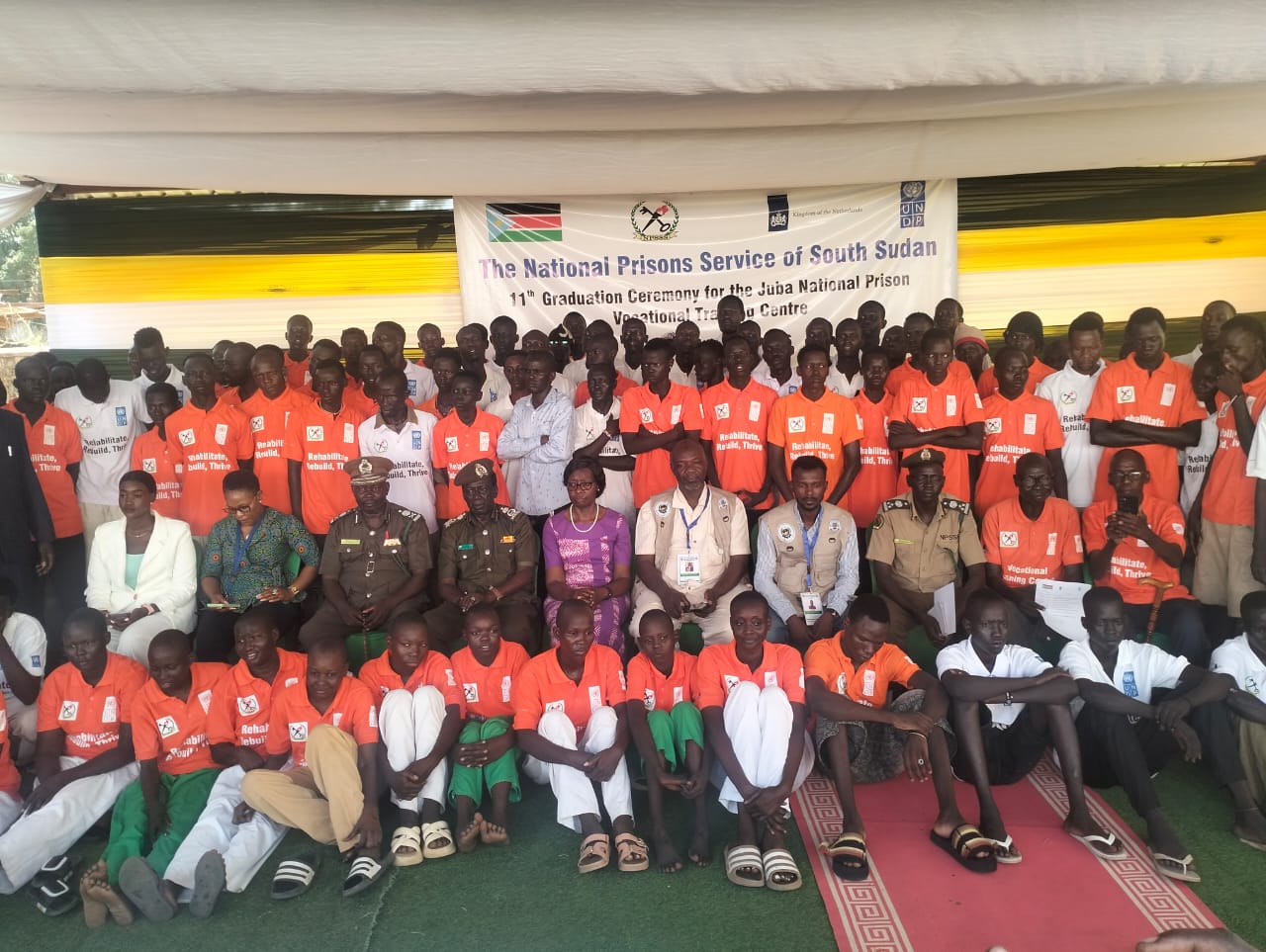
The inmates, who graduated under the rehabilitation program on Thursday, included 41 women, marking the institution’s 11th graduation ceremony
By Aguok Chok
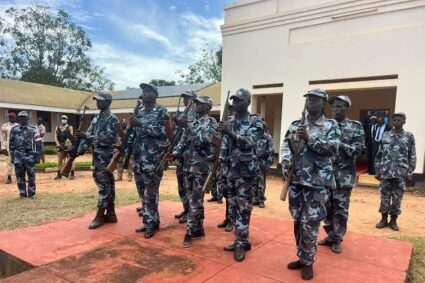
A group photo of the inmates, security and government officials following the graduation ceremony.[Photo: Aguok Chok; The City Review]
Vocational training has given hundreds of South Sudanese inmates renewed hope, practical skills and opportunities to rebuild their lives after prison.
This follows the graduation of 536 inmates, including 41 women on Thursday from the Juba National Prison Vocational Training Centre (VTC).
The graduation highlighted the role of rehabilitation in transforming inmates, equipping them with practical skills and preparing them to return to their communities as productive members of society.
Speaking during the 11th graduation ceremony at the National Prison Vocational Training Centre on Thursday, the Director General of Human Resources and Training at the South Sudan National Prisons Service, Maj. Gen. Anthony Oliver Legge said the institution remains committed to rehabilitating inmates despite operational and resource challenges.
He explained that rehabilitation is helping former inmates acquire skills, secure employment and successfully reintegrate into their communities.
“Many of the graduates from this particular facility and who are released already from this prison, they are working outside, earning good life,” he said.
Legge also highlighted improvements in prison infrastructure, including renovated accommodation facilities and a modern tailoring workshop that would enable inmates to produce uniforms for the prison service and other military institutions.
He attributed the improvements to support from AFK Concept and Better Tomorrow Foundation, which funded renovation works at the prison.
In her remarks, Madam Catherine waliaula, Acting Deputy Resident Representative, Acting Resident Representative of the United Nations Development Programme (UNDP) in South Sudan, said the programme has demonstrated that people can change when given opportunities, skills and support.
According to her, UNDP followed the progress of former inmates who had successfully returned to their communities, secured livelihoods and supported their families.
“We have seen your predecessors, your colleagues who have been out there. They have changed their lives. They have made a living, to support their families, to come up with skills and help others,” she said.
Catherine encouraged the graduating inmates to use their newly acquired skills to create positive change in their lives and contribute to national development.
“This is not just a paper. There is much more in your brain. There’s much more in your hands. There’s much more in your skills that you are going to take out there,” she told the graduates.
She also acknowledged the National Prisons Service for maintaining its partnership with UNDP despite challenges related to finances, resources and personnel.
Manyok also explained that she had participated in teaching other inmates at the facility, while learning from fellow trainees.
She expressed appreciation to the prison administration and partners for bringing educational and vocational services closer to inmates.
Her testimony demonstrated how rehabilitation programmes can help inmates discover their abilities, develop confidence and prepare for opportunities beyond prison walls.
Similarly, Fedeli Opere, representing the male graduates, said he had acquired tailoring and plumbing skills that would help him earn a living after his release.
“When he was admitted in the prison, I don’t know anything, I tried to know how to tailor crosses,” he said.
Meanwhile, Col. Engineer Sabuni Samuel Elija, Senior Supervisor of Vocational Training Centres, Works and Technical Services, said the programme trained 3,786 inmates across Juba, Wau and Malakal since 2016.
He said follow-up studies showed that 98 per cent of the graduates were engaged in employment after their release.
The 12 vocational courses offered include welding and metal fabrication, auto mechanics, electrical installation, building construction, tailoring, agriculture, plumbing, carpentry and joinery, food processing, bakery, information technology, and hairdressing and beauty therapy.
The testimonies of the graduates demonstrated that imprisonment does not have to mark the end of an individual’s future.
Through vocational training, education and institutional partnerships, rehabilitation offers inmates another opportunity to rebuild their lives, support their families and contribute positively to South Sudanese society.