


WES trains over 600 police officers to man security and protect voters

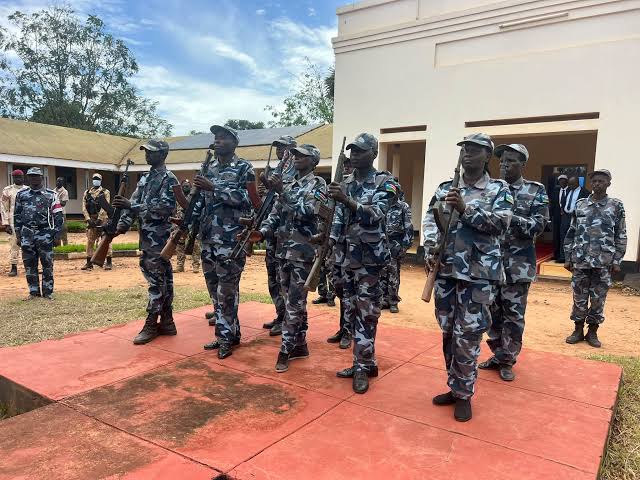
The initiative comes at a critical time for Western Equatoria, where security incidents and movement restrictions have raised concerns on whether communities will participate safely in the elections
By Emmanuel Mandella
As Western Equatoria State prepares for the February, 2027 general elections, authorities are training 619 police recruits in an effort to strengthen security and protect voters, particularly in remote communities where insecurity could prevent citizens from freely exercising their democratic rights.
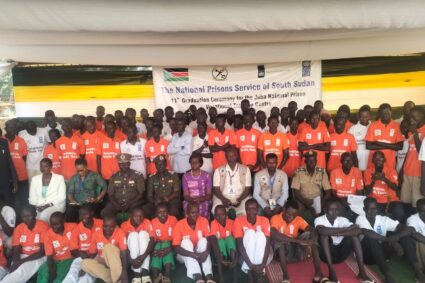
The training programme, which includes 37 women, is taking place in Yambio, Maridi and Mvolo under the supervision of 57 trainers. The program is intended to prepare officers for deployment across the state to maintain public order and provide security during the election period.
The initiative comes at a critical time for Western Equatoria, where security incidents and movement restrictions in some areas have raised concerns about whether all communities will be able to participate safely in the forthcoming elections.
Nadiangere Payam in Yambio County, parts of Tambura County, Nagero County and Mundri East are among the areas where security challenges have been reported. Recent incidents illustrate the difficulties facing authorities as they prepare to extend electoral activities and public services into vulnerable communities.
In November, voter registration materials intended for Nagero County were stranded in Tambura due to insecurity along the road, Western Equatoria State High-Level Election Commission said. In another incident, renewed fighting in Tambura County displaced at least 300 households. An attack on a vehicle carrying political delegates in Mundri East also left people dead and others missing.
These incidents underline the importance of ensuring that police deployment goes beyond major towns and reaches communities where insecurity could disrupt voter registration, campaigning and polling.
Caretaker Governor Badagbu Daniel Rimbasa said the state government was establishing the necessary police capacity to ensure that polling stations remain secure, with police officers expected to take responsibility for election-day security rather than the army.
“Because we will not have the army inside the polling stations, the police will be the ones responsible. We need enough police whom we can deploy to different places to maintain order and peace within Western Equatoria State,” Badagbu said.
The governor made the remarks during a visit to recruits at the State Police Headquarters in Yambio on Tuesday, where he handed over uniforms and boots to support the training programme.
He said the state had established training centres in Yambio and Maridi to prepare officers for deployment across Western Equatoria.
The programme, according to Badagbu, was initiated by President Salva Kiir and the Minister of Interior and implemented through the Inspector General of Police, as well as the state governments.
While the training represents an effort to strengthen police capacity, the major challenge will be ensuring that officers are deployed to areas where security threats could prevent citizens from participating in the electoral process.
For residents of Nadiangere, parts of Tambura, Nagero and Mundri East, the presence of adequately trained and impartial police officers could be particularly important in creating conditions for safe movement, political engagement and access to polling centres.
The difficulties experienced in transporting voter registration materials to Nagero demonstrate how insecurity can affect electoral preparations even before polling day.
If similar obstacles persist during the campaign and voting periods, some citizens could face difficulties reaching registration centres, attending political meetings or travelling to polling stations.
The deployment of police officers to vulnerable areas would therefore need to be accompanied by proper logistical arrangements, coordination with local authorities and credible measures to protect civilians.
Badagbu acknowledged that the training programme was facing logistical and other challenges, pledging continued support from the state government.
He said issues requiring national-level intervention would be referred to authorities in Juba.
The governor also disclosed that medical supplies had been delivered from Juba and that arrangements would be made to provide medical personnel whenever necessary.
Meanwhile, Musa Daud Kodi, chairperson of the state police training programme, said the recruitment and mobilisation exercise began on August 10 and concluded on August 20, 2026.
He said the recruits had already spent more than two months undergoing training.
“We are now two months and two days in the field doing the training,” Kodi said.
Meanwhile, State Police Commissioner Justin Bringi Waiwai welcomed the provision of uniforms and boots, saying the support had encouraged trainers as they continued preparing the recruits for deployment.
The effectiveness of the programme will ultimately depend not only on the number of officers trained but also on their professionalism, discipline and ability to protect all citizens without political or community discrimination.
As police officers prepare to take responsibility for security at polling stations, their conduct will be central to public confidence in the electoral process.
Citizens must be able to travel safely, attend campaign activities, access polling centres and cast their ballots without intimidation, harassment or unnecessary restrictions.
For Western Equatoria, the challenge is particularly significant in remote and insecurity-affected communities, where the distance between security facilities, difficult road conditions and armed threats can complicate deployment.
The state government and national security institutions will therefore face an important test: ensuring that the 619 recruits are not simply trained and equipped, but strategically deployed where their presence can make a meaningful difference.