


RJMEC sounds alarm over deteriorating situation, warns of peace deal collapse


By Aguok Chok
The Reconstituted Joint Monitoring and Evaluation Commission (RJMEC) has raised a serious alarm over the rapidly deteriorating situation in South Sudan, warning that the country’s fragile peace agreement is being severely undermined.
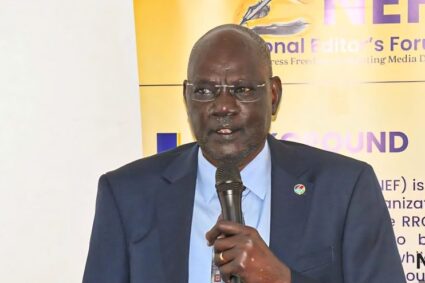
Addressing the African Union Peace and Security Council last Friday, the Interim Chairperson of RJMEC, Amb. Maj. Gen. George Aggrey Owinow (rtd) said the political and security environment continues to worsen, threatening a return to widespread conflict.
In his briefing, delivered virtually from Juba, Owinow thanked the Council for the opportunity to present the current realities in the country.
“Thank you for inviting the Reconstituted Joint Monitoring and Evaluation Commission (RJMEC) to brief this esteemed Council on the current situation in the Republic of South Sudan,” he said.
He explained that the update builds on earlier briefings and RJMEC’s most recent quarterly report, which covers developments between October and December 2025.
As the body mandated to oversee the implementation of the Revitalised Agreement on the Resolution of the Conflict in the Republic of South Sudan (R-ARCSS), RJMEC painted a grim picture.
“I wish to inform this Council that the political and security situation in the Republic of South Sudan has greatly continued to deteriorate, and the implementation of the Revitalised Peace Agreement has been severely undermined,” Owinow told the Council.
He cited continued violations of the peace deal, including the aftermath of the March 7 Nasir incident and the arrest and detention of First Vice President Dr. Riek Machar Teny and other senior SPLM/A-IO officials.
According to the RJMEC chair, “serious violations of the R-ARCSS continue unabated,” raising deep concerns among peace partners.
Owinow further warned that unilateral decisions are eroding the power-sharing arrangements at the heart of the agreement. He pointed to “the unilateral removals and replacement of opposition-nominated representatives” from executive and legislative positions without consultation or consensus.
Such actions, he said, are weakening trust among the parties and undermining the spirit of the peace deal.
The security situation is equally troubling. Armed clashes between the South Sudan People’s Defence Forces (SSPDF) and the SPLA-IO have been reported in several states, including Jonglei, Upper Nile, Unity, and both Eastern and Western Equatoria.
These clashes are “in clear breach of the Permanent Ceasefire,” Owinow said, warning of a possible total breakdown if urgent action is not taken.
The continued fighting has worsened the humanitarian and economic crisis. Owinow noted that conflict, climate shocks, currency depreciation, and cross-border displacement from Sudan are compounding suffering. “The people of South Sudan are once again bearing the brunt of renewed conflicts,” he said.
In response, RJMEC urged decisive action from national leaders and regional partners. The Commission called on parties to “cease all forms of hostilities, embrace inclusive genuine dialogue,” and return fully to implementing the R-ARCSS “in letter and spirit.”
Owinow stressed that without dialogue, trust, and respect for the agreement, South Sudan risks losing hard-won peace gains.
In conclusion, the RJMEC chair appealed to the African Union to remain engaged and seized of the situation, emphasizing that sustained regional and international support is critical to preventing further deterioration and guiding South Sudan back onto a path of peace and stability.