




S. Sudan, Sudan confident as they do first test on oil facilities

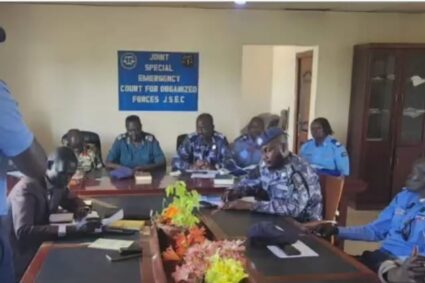
The testing was witnessed by a high-level government delegation that included key security chiefs, engineers, among others, and gave greenlight to resumption of oil production
By The City Review
On Sunday (October 21), the security advisor to President Salva Kiir, Tut Gulwak, held a meeting with the Chairman of the Sudanese Sovereignty Council, Lieutenant General Abdel Fattah Al-Burhan, to discuss the status of South Sudan oil and the need to address the challenges facing the flow and pumping of the country’s oil through Sudan.
According to a statement issued by the Sudanese Sovereignty Council, after the meeting Tut showed the significance and deep interest of South Sudan in the developments of the oil issue, being a priority resource for the country.
He said that the Chairman of the Sudanese Sovereignty Council directed the competent authorities to facilitate and address all obstacles to the flow of oil through Sudanese territory.
On his part, Tut confirmed the readiness of South Sudan to implement what was agreed upon with Sudan.
“All technical teams in the two countries are ready to increase production and the flow of oil through the port of Bashayer,” he said.
Tut said that his visit to Sudan, which was instructed by President Kiir, aims to follow up on all issues related to South Sudan’s oil, pointing out that the oil pipeline has been affected by the repercussions of the war in Sudan.
He explained that the Chairman of the Sudanese Sovereignty Council confirmed during the meeting on Sudan’s readiness to provide everything that would help in the flow of oil and provide all facilities in this regard.
The Sudanese government had announced, last March, the suspension of pumping of the country’s oil through Sudanese territory due to a malfunction in the transmission lines.
According to the Sudanese authorities, the malfunction was the result of a rupture due to a blockage in a pipeline in an area controlled by the Rapid Support Forces north of Sudan’s White Nile State, about 20 kilometers south of the city of Qatina.
South Sudan was pumping about 150,000 barrels of crude oil per day through Sudan for export, according to a formula that was agreed upon earlier.
The cessation of oil exports caused economic problems in the country, most notably the loss of a large part of the value of the national currency against the US dollar, which led to a significant increase in the prices of basic goods and services, and ultimately pushed the effects to the civil service payrolls, delaying the salaries up to 11 months, as teachers, security forces, among other government employees, went without pay.
President Kiir- Al-Burhan meeting
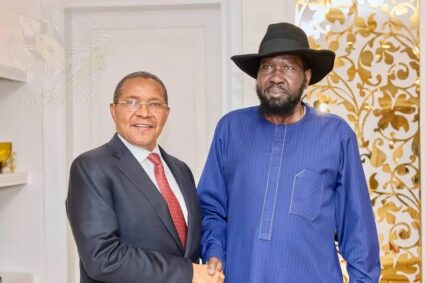
And in a meeting that brought some glimmer of hope to the economy and country, President Salva Kiir held a bilateral discussion with his Sudan counterpart, Lt. Gen. Abdel Fattah Al-Burhan in South Sudan, where they discussed significant steps towards resumption of oil product and export.
Speaking after the meeting, Foreign Affairs Minister Ramadan Goc confirmed that Sudanese engineers had accomplished the necessary technical preparations for the resumption of oil production.
The Minister also said engineers from South Sudan were expected to visit Sudan in the coming weeks to familiarize themselves with the readiness of the facilities to jump-start production.
Oil resumption greenlight
Yesterday (on Sunday), engineers from Bashayer Pipeline Company in coordination with the Sudanese Ministry of Petroleum tested the flow of South Sudan’s crude oil from production facilities to the central processing terminal in Port Sudan on the Red Sea coast, a move that signaled the official resumption of the country’s oil production.
The testing was witnessed by a high-level government delegation that included key security chiefs, engineers, and the Minister of Petroleum.
This could be a wide step towards reclaiming a large share of the country’s revenue, with the oil resource contributing about 80 percent to the economy, making the country one of the most oil dependent economies in the world.
The cessation of oil exports caused economic problems in the country, most notably the loss of a large part of the value of the national currency against the US dollar.