

Tumaini mediators call for compromise as parties cling to positions

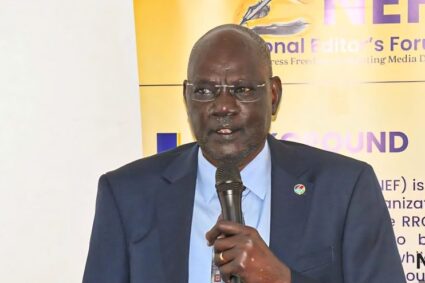
Dr. Mohamed Ali Guyo, the deputy chief mediator, described the latest developments as both challenging and encouraging.
By Emmanuel Mandella
The mediators of the Tumaini Initiative have called for compromise as parties to the peace talks stuck to their hardline positions.
Dr. Mohamed Ali Guyo, the deputy chief mediator, described the latest developments as both challenging and encouraging.
“Both sides have focused extensively on the eight protocols negotiated last year, which is a significant step forward,” said Dr. Guyo. “This common ground gives us momentum to narrow key points of difference and aim for a meaningful agreement.”
The eight protocols, which form the backbone of the Tumaini framework, have been the basis of presentations by both the government and opposition. However, while the government remains committed to aligning the protocols with the Revitalized Agreement on the Resolution of the Conflict in South Sudan (R-ARCSS), opposition groups argue for a standalone Tumaini agreement.
Dr. Elia Martin Lomuro, spokesperson for the government delegation, expressed frustration at what he termed a “missed opportunity” by the opposition.
“We were expecting their presentation to respond to either the government’s proposal or the mediation framework provided in December 2024. Instead, we got a justification for their refusal to sign the R-ARCSS in 2018,” Dr. Lomuro explained.
The opposition presentation reportedly detailed grievances, including claims of political manipulation during earlier negotiations, failure to implement the 2018 agreement, and a lack of political will from the government.
They also called for Tumaini to operate independently, with its own governance structure and oversight mechanisms.
Meanwhile, the government has remained firm in its position.
“Their proposal is contradictory to the principles of R-ARCSS and diverges from the eight protocols agreed upon. These issues must be addressed in line with the peace framework already in place,” Dr. Lomuro emphasized.
Dr. Guyo acknowledged the diverging perspectives but maintained that mediation efforts are focused on bridging these gaps.
“For us, the challenge is how to bring a middle ground between these divergent views. The parties must define the relationship between R-ARCSS and Tumaini,” he said.
Both sides were given two days to reflect on the presentations.
Dr. Guyo remarked: “It’s time for the parties to move from presentations to real dialogue. The goal is to find practical solutions that benefit the people of South Sudan.”
Dr. Guyo called for unity and compromise, “The success of these talks depends on the willingness of the parties to prioritize peace over political differences. South Sudan’s future is at stake.”
“For us, the challenge is how to bring a middle ground between these divergent views. The parties must define the relationship between R-ARCSS and Tumaini,” said Dr. Mohamed Ali Guyo, the deputy chief mediator.