



Vision Health Institute opens in Western Equatoria to train on health

By Emmanuel Mandella
Vision Health Institute officially launched in Western Equatoria, promising to break the barriers that have barred many youths from pursuing medical careers.
The institute, spearheaded by the Evangelical Lutheran Church of South Sudan and Sudan, will provide affordable, accessible, and high-quality health education to youth from under-served communities, especially from rural areas.
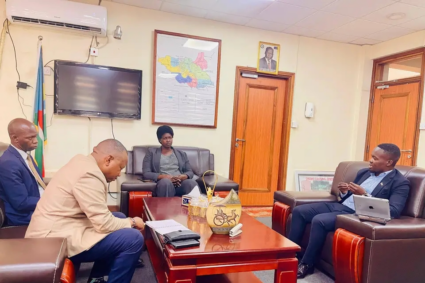
“This is the birth of a vision. Our children no longer need a passport or a miracle to become health workers. This dream starts at their doorstep,” declared Anna Tuna Richard, Acting Minister of Health and incumbent Roads Minister.
Additionally, minister Tuna pledged 500,000 South Sudanese Pounds (SSP) in support of the initial operations. She called on communities to view education as an investment, not a burden.
“We shall not go back and sleep. We will walk with you shoulder to shoulder, and we will fight for this institution to grow,” she emphasized.
The Vision Health Institute now joins a growing network of health training institutions in Maridi, Lui, and Yambio. However, its unique approach is in targeting students from remote regions who often lack the means to travel or afford tuition elsewhere.
The event was as emotional as it was symbolic, filled with stories of grit and determination from students who have been quietly building the future even before the ribbon was cut.
Mr. Dazangan Zebedeo, a third-year student, electrified the crowd with his words.
“We are doing this by ourselves and we do bricklaying, we hustle, and we learn. I want the youth to stop wasting time. The school is here. No one will do it for us.”
Equally touching was Ngbarago Simon Sebit, an orphan pursuing a diploma in midwifery at Vision Health Institute.
“My grandmother was a traditional midwife who inspired me. Now I deliver babies safely, and even my seniors respect me for the skills. I’ve gained here. Vision Health Institute is not just a school, it is my hope, my future, and my voice.”
Ngbarago, who works part-time just to afford school fees, appealed for broader support: “It’s hard, yes. But if I can do it, so can others. All we need is support.”
At the heart of this initiative is Rt. Rev. Dr. Anibati Peter Abia, Presiding Bishop of the Evangelical Lutheran Church of South Sudan and Sudan, whose leadership and vision sparked the creation of the institute.