



WES Governor criticizes ‘appointment of partisan electoral commission chair’

Futuyo expressed deep concerns about the integrity of the upcoming electoral processes under the current leadership.
By Emmanuel Mandella
The Governor of Western Equatoria State, Alfred Futuyo, has criticized the appointment of the state’s electoral commission chairperson, accusing government of appointing an official who is partisan.
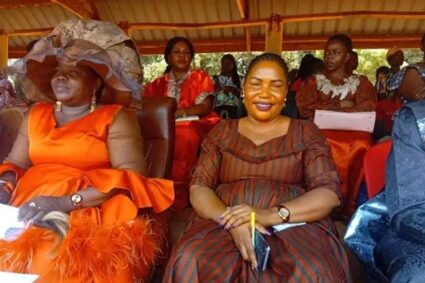
Speaking over the weekend at the launch of a civic engagement and political space initiative project funded by the UNMISS Quick Impact Project, Futuyo expressed deep concerns about the integrity of the upcoming electoral processes under the current leadership.
Governor Futuyo was alluding to the appointment of an electoral commission chairperson he claims is an active member of the Sudan People’s Liberation Movement (SPLM). This, he argues, is a conflict of interest and poses a threat to the impartiality required for a credible electoral process.
“Show me an article that says the election commission should be an active member of any party,” Governor Futuyo challenged during his address. “If he’s the chairperson, will he allow SPLM-IO to win the election? Never.”
The governor’s remarks highlight growing concerns as the state prepares for the 2026 national elections, the timelines having been postponed due to security concerns, constitutional issues, and logistical challenges.
The extension was intended to provide the transitional government additional time to implement the critical provisions of the Revitalized Agreement on the Resolution of the Conflict in South Sudan (R-ARCSS).
Futuyo appealed to political leaders to focus on the development of their constituencies during the two-year extension period, emphasizing that unity and transparent governance were essential to South Sudan’s progress. He argued that appointing a non-partisan electoral commission chair would safeguard the democratic process and ensure that all political parties have a fair chance at the polls.
Adding to the call for neutrality, Mr. Wanga Emmanuel Marko, chairperson of the Network for Civil Society Organizations in Western Equatoria, stressed the importance of honoring the principles of civic engagement.
“Political parties must implement the spirit and letter of civic engagement to maintain trust in our electoral process,” Marko said.
In response to Futuyo’s criticism, Mr. Jerom Barikue, representing the state electoral commission, defended the challenges faced by the commission. He highlighted that the postponement of elections was necessary to address ongoing issues with security arrangements and the availability of essential electoral materials.
“There are several reasons as to why the elections were extended, such as constitutional gaps, security arrangements, among other factors,” Barikue noted.
Governor Futuyo’s call for a non-partisan election commission underscores the growing pressure on South Sudan’s leaders to bolster democratic practices as the nation approaches a critical electoral milestone. The credibility of the upcoming elections will hinge on impartial oversight and the commitment of all political actors to fostering a fair and transparent process.
“Political parties must implement the spirit and letter of civic engagement to maintain trust in our electoral process,” Wanga Emmanuel Marko, chairperson of the Network for Civil Society Organizations in Western Equatoria.