
South Sudan targets 200,000 Barrels of oil per day within two to three years, Petroleum Minister says

Caretaker minister says more than 85 per cent of South Sudan’s territory remains unexplored for oil and gas, presenting significant opportunities for potential investors and international partners.
By Samuel Yuang
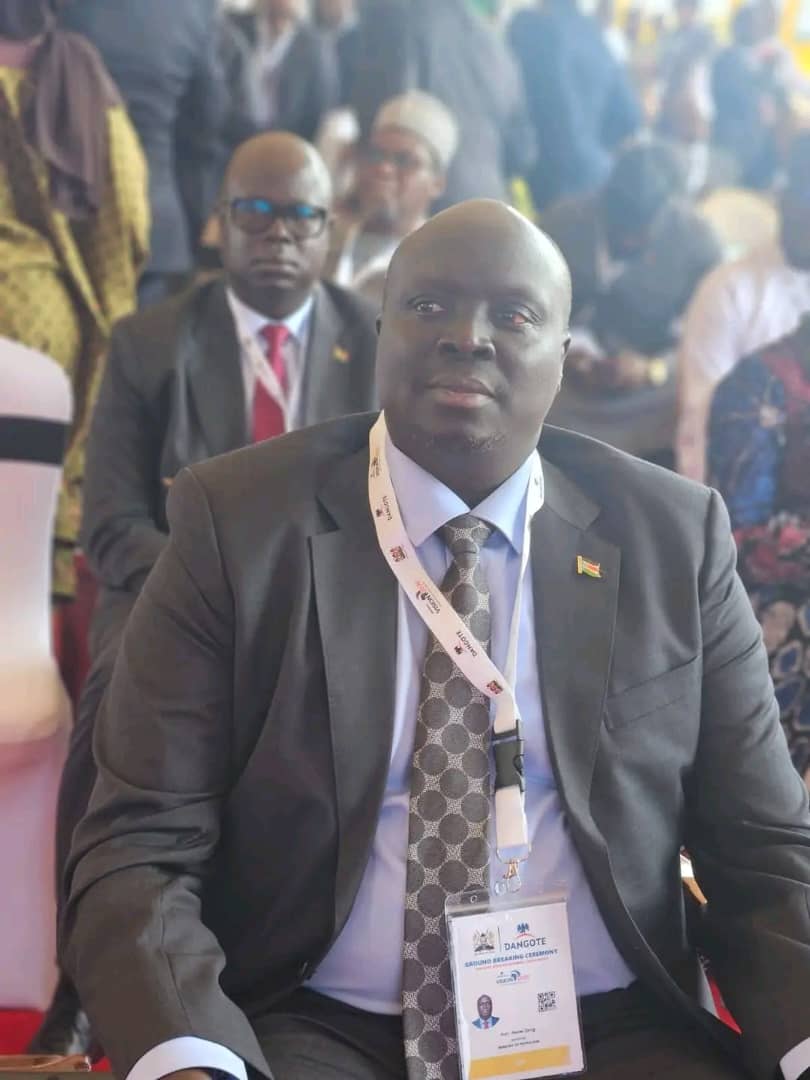
Caretaker Minister of Petroleum, Engineer Awow Daniel Chuang. [Photo: Courtesy]
Caretaker Minister of Petroleum, Engineer Awow Daniel Chuang, says the country targets to increase daily oil production to more than 200,000 barrels within the next two to three years, as the government seeks to unlock the country’s vast untapped oil and gas resources.
Speaking on Tuesday during a national energy event dubbed, 2026 South Sudan Oil and Power, Minister Awow said the country is currently producing slightly below 170,000 barrels of oil per day, but expressed confidence that production could increase through investment, improved technology, cost optimisation and effective management of existing oil reserves.
“Our ambition is quite high based on our resources, and in two to three years’ time, we should be able to move towards 200,000 and above,” he said.
The minister noted that although the ambition of reaching 400,000 barrels per day was achievable, it would require coordinated efforts involving geology, production facilities, investment, logistics and favourable geopolitical conditions.
He emphasised that increasing production is not simply a matter of drilling more wells, explaining that the country must also address the natural decline of existing oil fields.
According to Awow, South Sudan has significant opportunities to increase production from its existing reserves by adopting advanced recovery technologies, noting that recovery rates remain relatively low in several oil blocks.
He cited recovery rates of approximately 24 per cent in Blocks 3 and 7, 32 per cent in Blocks 1, 2 and 4, and only eight per cent in Block 5A.
The minister argued that improving recovery rates could unlock additional oil without necessarily depending entirely on discovering new reserves.
Awow also revealed that more than 85 per cent of South Sudan’s territory remains unexplored for oil and gas, presenting significant opportunities for potential investors and international partners.
He said the government had opened 14 blocks for exploration licensing and was preparing to reintroduce five blocks under the first licensing round, followed by additional rounds in the coming years.
The minister further highlighted the growing role of the state-owned Nile Petroleum Corporation (Nilepet), describing it as an increasingly significant shareholder in the country’s petroleum industry.
He said strengthening the national oil company would help South Sudan exercise greater participation in the management and development of its natural resources.
On infrastructure, Awow identified high transportation and energy costs as major challenges affecting the petroleum sector, revealing that logistics expenses in the oil industry could exceed US$70 million, which could be saved through improved road networks and regional infrastructure.
He also called for investment in domestic refining capacity, arguing that South Sudan should not continue exporting crude oil while importing refined petroleum products at high prices.
“Having fuel is not enough. But we must have fuel at an affordable price. We must have energy at an affordable price,” he said.
The minister further disclosed that the country has the potential to generate electricity using crude oil and heavy fuel oil, reducing dependence on imported energy and supporting the development of mini-grids across the country.
He explained that some power-generation facilities in the oil fields already operate using crude oil and that similar arrangements could help address electricity challenges in Juba.
Awow also highlighted the importance of developing the country’s petroleum resources to support other sectors, including agriculture, tourism, livestock, fisheries and mining.
He described South Sudan as a potential regional energy hub and called on international investors, service providers and development partners to work with the government to unlock its natural resources.
Addressing the country’s political and investment environment, the minister expressed optimism about the upcoming elections, saying he believed the electoral process would proceed peacefully and provide greater confidence to investors.
He concluded by stressing that South Sudan and the wider African continent must prioritise energy security, affordable fuel and infrastructure development to support economic growth and reduce energy poverty.
He expressed hope that the next edition of the energy forum would showcase further progress in South Sudan’s oil and gas industry and broader regional energy cooperation.
.