


Citizens urged to adjust expectations from Tumaini Initiative

The academic expressed guarded optimism in the process, saying if the parties have a political will, they could address these agenda in a specified time
By James Chatim
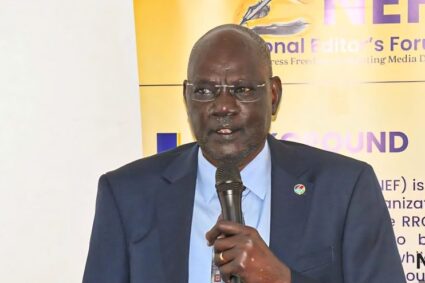
The famous South Sudanese researcher Dr. Luka Biong Deng has called on the citizens to readjust their expectations from the Tumaini Initiative as peace within the two weeks might be elusive.
Dr. Biong who is also the Managing Director of the Sudd Institute said as the parties to the Tumaini Talks are currently in the process of agreeing on the agenda suggested by the mediators, the answer to the Tumaini Initiative to restore hope for peace in South Sudan remains elusive.
According to him, the mediators had suggested five agendas including the Relationship between the Tumaini Consensus Protocols and the R-ARCSS, Implementation Structures/Mechanisms, Responsibility Sharing, Order of Election Preparation and Constitution-Making Process and time frame for concluding the Tumaini Initiative.
He added that if the parties have a political will, they could address these agenda in a specified time.
However, Dr. Biong highlighted that the Relationship between the Tumaini Consensus Protocols and the R-ARCSS is largely addressed with the initiated protocols, and clarifying the relationship between these protocols and the R-ARCSS will not take time if these protocols are not reopened for renegotiation.
However, he stated that the implementation Structures/Mechanisms are almost ready as parties have worked on it and only waiting for finalization.
He hinted that agenda number three, which is Responsibility Sharing will take some time although the Opposition seems less interested in positions.
The Managing Director of the Sudd Institute explained that the Order of Election Preparation and Constitution-Making Process is more about sequencing and could be resolved if the transitional period is extended to 36 months as suggested by the Opposition instead of 24 months.
Dr. Biong pointed out that, the real challenge to the process would be the sequencing of the Relationship between the Tumaini Consensus Protocols and the R-ARCSS and Responsibility Sharing, as the government is prioritizing the Relationship between Tumaini Consensus Protocols and the R-ARCSS, while the Opposition is prioritizing Responsibility Sharing to be discussed first.
He said the primary task of the mediation team is to resolve the outstanding issues and not to renegotiate the initialled protocols.
“There might be a need to clarify the relationships between these initial protocols and the R-ARCSS to ensure clarity and avoid overlapping and duplication but it should not take prominence in these talks as directed by the two heads of state,” Dr. Biong suggested.
According to him, another option for the mediation team is to parallelly and concurrently discuss the Relationship between the Tumaini Consensus Protocols and the R-ARCSS, and Responsibility Sharing.
He said that might be the best option to meet the demands of the parties with the understanding that discussion of the relationship between the initial protocols and the R-ARCSS is not about renegotiating the protocols but for clarity and alignment as stressed by Gen. Kuol Manyang.
There might be a need to clarify the relationships between these initial protocols and the R-ARCSS to ensure clarity and avoid overlapping and duplication, but it should not take prominence in these talks as directed by the two heads of state,” South Sudanese researcher, Dr. Luka Biong Deng.