


Lawyer questions absence of God’s phrase in national constitution

This contradiction, she argued, reveals deeper concerns about the country’s constitutional clarity and identity.
By Aguok Chok
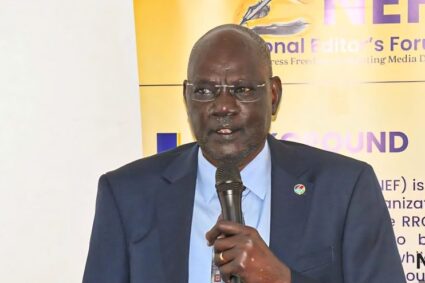
On the closing day of a two-day workshop on women’s leadership in the constitution-making process, Justice Ajonye Perpetua Paya delivered a powerful reflection that stirred critical questions on national identity, values, and constitutional direction.
“Is God mentioned in it?” she asked, referring to the Constitution of the Republic of South Sudan.
She said in the national anthem, there is a phrase that talks about praising God, but there is no mention of God in the Constitution.
Her thought-provoking remarks underscored a key contradiction between South Sudan’s foundational documents.
“In 2005, we said we wanted a secular constitution because of the challenges of the Sharia. Now, is it a secular constitution?” she questioned.
“And in our national anthem, we say, ‘God, we praise, we glorify.’ Are we together?”
This contradiction, she argued, reveals deeper concerns about the country’s constitutional clarity and identity.
“Did we contradict ourselves in the Constitution? It’s very important for women,” Perpetua stressed, urging women to reflect on the national values being enshrined or excluded.
Throughout her address, the professional lawyer emphasized the importance of inclusion and accountability in the constitutional process, particularly for women. “Being the majority… are we accountable?” she asked.
“This constitution must hold all of us accountable. When they mess, which means we mess.”
She called for the constitution to reflect the realities and aspirations of South Sudanese women, including guiding principles in political, economic, social, and cultural spheres.
“What do we want in the guiding principle… which peculiarly reflects our own position as women in the constitution?”
She also noted the uniqueness of South Sudan’s resources and structure, “For example, in the Republic of South Sudan, we are an oil-producing country. Now, what should the constitution talk about the oil and assets of women?” she added.
“We have a lot of fish… our definition of economic guidelines is not the same.”
Talking about the issues of governance, she highlighted the need for federalism to be considered thoughtfully: “Now that the quashifedra system… has to graduate to what we call the federal system of governance. Are we calling for the inclusion of federal system for governance in a permanent constitution?”
Perpetua said pressing challenges like environmental issues and climate change should be addressed.
“The flood is all over the country. Now, this is where we have problems as women… how do we incorporate it in the constitution?”
She emphasized the role of sectoral laws such as family law, the women’s enterprise fund, and affirmative action as essential parts of a broader constitutional vision.
“These are sectoral laws. The penal law, if you do not put that this thing is an offence… whether you go to courts of law, it is not an offence.”
In her final remarks, the female lawyer called on fellow women to engage critically and strategically on the importance of identifying the challenging and pressing things in the constitution-making process.