




By Suzan Peter Mabuong
Modernization has come like a fast-flowing river into the heart of South Sudan—bringing fresh hope, new skills, and a sense of identity. At the same time, it has stirred the waters of tradition, unity, and simplicity that once defined our communities. As we stand in this new season, it is important that we reflect together on how modernization has changed our lives—for the better and for worse—and how we, the people of this young nation, can rise and shine regardless of the challenges.
Many South Sudanese spent years in exile during the war, scattered across continents like seeds in the wind. Though it was a painful season, it became a time of learning, exposure, and awakening. Living in places like the United States, Canada, Australia, Europe, and East Africa, South Sudanese men and women were introduced to new cultures, advanced education, and global opportunities. What the war tried to destroy; God used to prepare us for something greater.
In the days of the united Sudan, many South Sudanese lived in the shadows of Arab identity. Our languages, culture, and religion were buried under the weight of forced assimilation. Many grew up not knowing their true heritage, lost in unfamiliar customs. But now, with an independent nation to call home, the flame of identity is burning bright.
We see it everywhere. Our youth are shining. From music to sports, from business to fashion, a wave of fresh talent is rising. Young people are finding their voices and their platforms. South Sudanese artists are making music that speaks of pride, pain, and purpose. Athletes are gaining global attention—our basketball players are among the best in the world, and our runners are competing in international championships with courage and heart. We have models gracing global stages and entrepreneurs launching businesses that are creating jobs and dreams.

Mangok Mangok Mayen, a community leader and educator, reflects: “During the war, our people were scattered. But now that we are back together, we bring knowledge from every corner of the world. We have doctors, engineers, teachers, and leaders who were shaped by experiences abroad. This is our strength. We must use it to rebuild our country.”
Adeng Kuel Maluil, a young South Sudanese woman studying in the United States, shares, “I used to feel like I belonged to two worlds. But now, I’m proud to say I am South Sudanese. We are no longer hidden. We are no longer silent. The world is watching us, and we have something powerful to offer.”
But with this transformation comes a heavy cost. Modernization has also created new divisions among our people. There is growing tension between those who stayed in South Sudan during the hard years and those returning from the diaspora. Many who remain at home feel forgotten, while returnees often feel misunderstood. The result is a silent wall—one that prevents unity and teamwork. Instead of building together, we sometimes fall into comparison and competition.
In our villages, modernization has also drawn people away from the land. Farming, once a proud and productive way of life, is now neglected. Young men and women are leaving rural communities in large numbers, hoping to find better lives in cities like Juba. But many arrive only to face joblessness, high living costs, and a loss of purpose. The green fields are being abandoned, and the healthy rural lifestyles are disappearing.
Worse still, modernization has shaken the foundation of our families. Many men now live in South Sudan while their wives and children live in neighboring countries like Uganda, Kenya, and Ethiopia. As well as many men have also left their wives and children in the western countries. The separation is creating emotional gaps within households. Children are growing up without fathers. Women are raising families without the support of their husbands. What was once a united family system is slowly breaking apart.
One mother in Juba said, “My husband works hard, but I miss having him nearby. Our children need him. Modern life has given us phones and internet, but it has taken away togetherness.”
Despite these challenges, there is still great hope. The truth is this: South Sudan has everything it needs to rise. Our people are brilliant, strong, and full of potential. We must not let the changes of modern life divide us or distract us. Instead, we must learn to blend the best of the old with the best of the new. We can honor our traditions while embracing progress. We can stay rooted while still reaching higher.
Let us remember, no one will build this nation for us. It is our duty. It is our calling. The land of South Sudan is blessed with available resources and beautiful people. There is no reason why we cannot succeed. There is nothing we cannot do under the sun.
We must come together—those from the cities and the villages, those who stayed and those who left. Let us bring our talents, our stories, and our strengths to the table. Let us forgive one another, support one another, and dream together.
South Sudan is not just a land of war stories. It is a land of possibilities. It is a land of rising stars, future leaders, and untold miracles. Modernization is not our enemy. It is a tool. But how we use it will determine the kind of future we build.
Let us build wisely. Let us build in love. And let us never forget that we are one people—with one heart, one history, and one destiny.
South Sudan, the world is waiting to see what we will become. Let us shine. Let us rise. And let us lead.
Short biography:
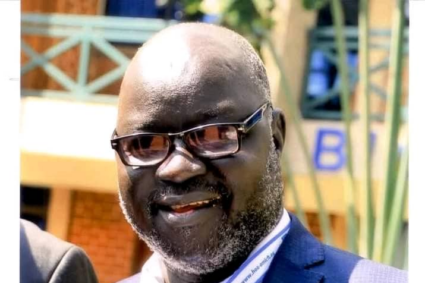
Suzan Peter Mabuong is a weekly columnist with ‘The City Review’ on social impact. She is a PhD candidate in Organizational Leadership at Grand Canyon University. Having lived in Canada and the United States for more than two decades before returning to South Sudan, Suzan brings a unique perspective that goes beyond the surface to explore the real stories shaping the nation. Suzan stands firm on the promises of God’s protection: “The Lord will keep you from all harm—He will watch over your life” (Psalm 121:7). Contact: beyondtheheadlines.ssd@gmail.com