





Over 70 illegal checkpoints along Juba-Nimule road, Trade Ministry finds


Ministry’s assessment evaluated operational performance along South Sudan’s busiest trade route and identified several structural and operational challenges that continue to slow cargo movement
By Aguok Chok
The Minister of Trade and Industry has identified more than 70 illegal checkpoints operating along the Juba–Nimule highway, raising serious concerns about trade and movement along the country’s main commercial corridor.
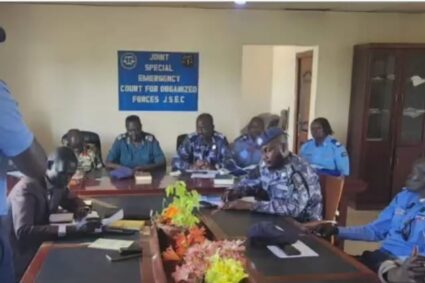
This was revealed during a high-level inspection conducted by Minister Atong Kuol Manyang Juuk, from February 7 to 9, 2026, which brought together key government agencies, border authorities, security institutions, and private-sector stakeholders to review the findings of a detailed Trade Corridor Assessment.
The assessment evaluated operational performance along South Sudan’s busiest trade route and identified several structural and operational challenges that continue to slow cargo movement and increase the cost of doing business.
According to the findings, overlapping mandates among numerous border agencies have resulted in repeated cargo inspections, creating long clearance delays that sometimes reach 48 hours.
The assessment also highlighted widespread revenue leakages linked to smuggling, the misuse of tax exemptions, and the continued bypassing of the electronic permit system in favor of outdated manual documentation processes.
Another major concern raised during the consultations was the large number of checkpoints between Juba and Nimule. Officials reported that more than 70 checkpoints—many of them unauthorized—have significantly slowed cargo movement.
In one example cited during the meeting, fish exports traveling less than 400 kilometers from Bor to Nimule can take up to seven days due to repeated stoppages and inspections.
Infrastructure gaps were also identified as key contributors to congestion at the border, including poor road conditions, limited warehousing capacity, insufficient parking space for trucks, and the absence of modern cargo-scanning equipment. Stakeholders further noted that women and small-scale traders face additional challenges, including harassment at crossing points and the lack of gender-responsive facilities.
To address these issues, the meeting adopted a phased reform roadmap covering immediate, medium-term, and long-term actions. Among the immediate measures is the establishment of a Joint Border Management Committee to coordinate daily border operations and improve accountability.
Authorities also announced that the electronic permit system will become mandatory, while the use of the outdated Form 15 will be officially discontinued. All clearing agents will be screened and licensed, and unregistered middle agents will be banned.
Medium-term measures include the dismantling of illegal checkpoints in coordination with security organs, the rollout of the Regional Electronic Cargo Tracking System to monitor shipments in real time, and the provision of security escorts for export cargo, particularly perishable goods.
Long-term plans focus on the rehabilitation of the Juba Nimule road, the construction of a One-Stop Border Post to eliminate duplicate clearance procedures, and the full digital integration of South Sudan’s customs systems with regional platforms.
The reforms also emphasize gender-responsive infrastructure and simplified procedures for small-scale traders.
Speaking at the closing session, Minister Atong Kuol Manyang Juuk reaffirmed the government’s commitment to implementing the reforms and strengthening corridor governance. “The transformation of the Nimule corridor is not just an economic necessity but a matter of national priority. By enforcing discipline and investing in modernization, we will reduce the cost of doing business and enhance South Sudan’s competitiveness in the region.”
Atong announced that a detailed implementation report will be submitted to the Council of Ministers, outlining institutional responsibilities, timelines, and performance indicators to ensure the agreed reforms are executed effectively.
Utilities
Due to such illegal checkpoints, for instance, fish exports traveling less than 400 kilometers from Bor to Nimule can take up to seven days due to repeated stoppages and inspections.