



President Kiir orders tightened border surveillance as ebola outbreaks persist in neighbouring DRC, Uganda

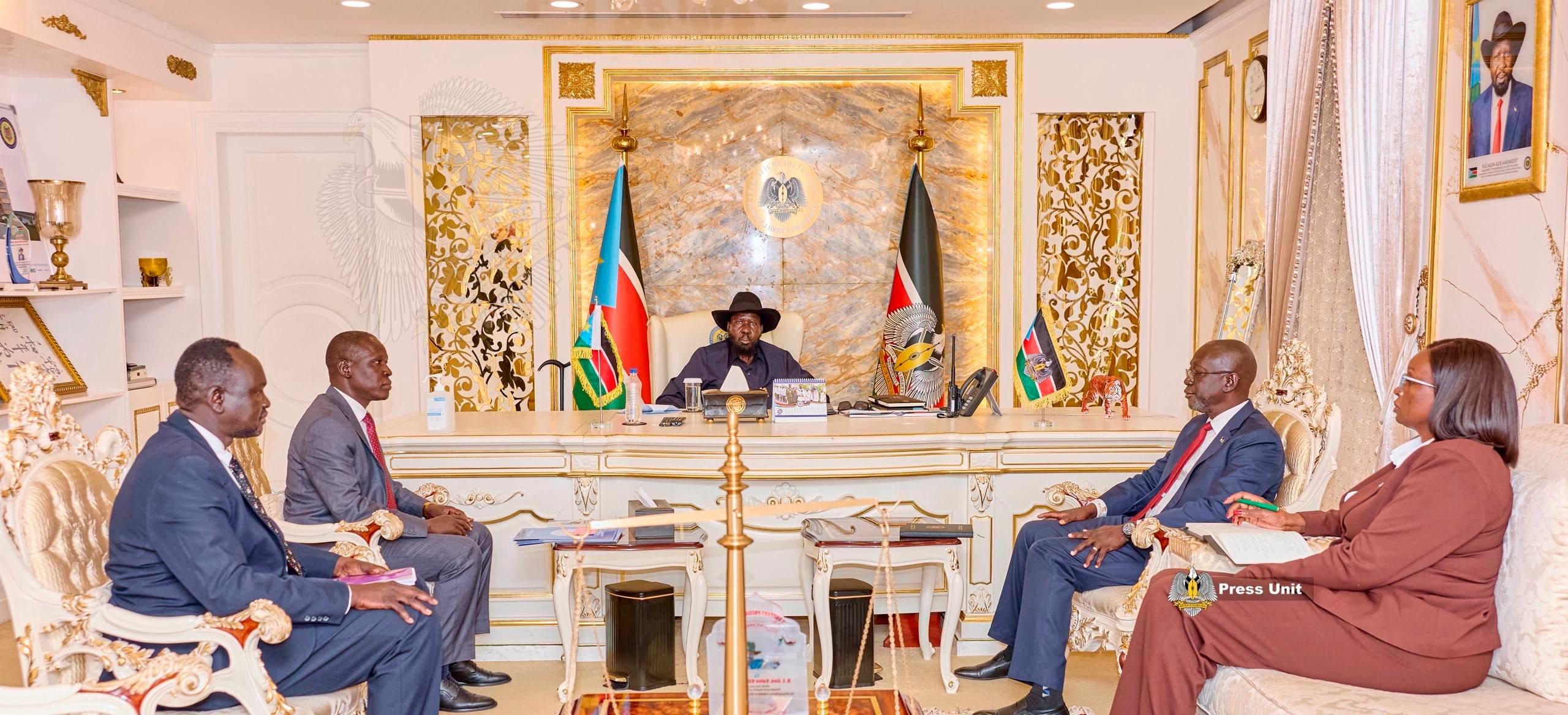
Kiir instructs relevant institutions to intensify monitoring at border crossings and ensure close coordination between health and security agencies to prevent the possible spread of the virus into South Sudan.
By Riak Chol
President Salva Kiir Mayardit has directed health authorities and security agencies to strengthen surveillance, screening, and emergency preparedness measures across South Sudan’s ports of entry amid ongoing Ebola outbreaks in neighboring countries.
The directive was issued following a comprehensive briefing presented to the President on the country’s preparedness and response capacity by the National Public Health Institute and health officials.
During the briefing, President Kiir instructed relevant institutions to intensify monitoring at border crossings and ensure close coordination between health and security agencies to prevent the possible spread of the virus into South Sudan.
He emphasized the importance of strict border management, including enhanced screening of travelers and preventing unauthorized entries by individuals who may pose a public health risk.
“We pray to God to reduce all the illnesses affecting our people, but you must also do what is required of you,” President Kiir said. “No one is blamed for the sake of blaming. People must do what they are supposed to do. We are putting the health of the South Sudanese people in your hands, and we trust that you will do everything possible to ensure their safety.”
The Minister of Health, Luke Thompson, informed the President that South Sudan has been actively engaging with regional partners to coordinate preparedness efforts.
He revealed that he recently participated in a tripartite meeting in Kampala aimed at developing a joint preparedness and response strategy among countries considered at high risk of Ebola transmission.
Health authorities also acknowledged support received from the Senior Presidential Envoy on Special Programs, who donated ten Toyota Land Cruiser vehicles to strengthen emergency preparedness and response operations.
Officials said the vehicles will enhance mobility and coordination during public health emergencies, particularly as the region remains on high alert over the ongoing Bundibugyo strain of Ebola Virus Disease.
Meanwhile, the Executive Director of the National Public Health Institute, Dr. Kediende Chong, urged the public to comply with health guidelines issued by authorities.
He advised citizens to minimize handshakes, avoid unnecessary physical contact, and adhere to preventive measures designed to reduce the risk of infection from infected individuals or animals.
Health officials reassured the public that the government remains fully committed to safeguarding the population from potential outbreaks. They stressed that efforts are underway to strengthen emergency preparedness systems, improve response capacity, and enhance coordination among all relevant institutions responsible for disease surveillance and public health protection.
South Sudan shares extensive borders with both the Democratic Republic of the Congo and Uganda, making cross-border disease surveillance a critical component of the country’s public health strategy. Authorities say heightened vigilance remains necessary as neighboring countries continue to battle Ebola outbreaks, which pose a potential threat to regional health security.
The government has urged citizens to remain alert, follow official health advisories, and promptly report any suspected symptoms to health authorities as part of nationwide efforts to prevent the disease from entering the country.
In the Democratic Republic of the Congo, health authorities have confirmed 344 Ebola cases and 60 deaths linked to the current Bundibugyo strain outbreak. An additional 116 suspected cases remain under investigation meanwhile in Uganda, authorities have confirmed 15 Ebola cases, including 1 death. The latest update added six new cases among known contacts of infected individuals.
As a precautionary measure, the United States instituted entry bans on foreign nationals travelling from South Sudan, the Democratic Republic of Congo and Uganda, within 21 days due to the severe Ebola outbreak. Bahrain and Jordan would also issue similar restrictions to the three countries.
World Health Organization Director General Dr. Tedros Adhanom Ghebreyesus declared the outbreak of the rare Bundibugyo strain of the virus a public health emergency of international concern last month, this being the first time the head of the agency doing so before convening an emergency committee.
Thus far, various countries have instituted measures to tame the spread of the virus or its contamination.