



The fight against gender-based violence gains support in South Sudan

By Suzan Peter Mabuong
In every corner of South Sudan, a new movement is rising a movement that calls for the protection of the most vulnerable among us. Women, girls, and the weak members of society have long suffered in silence. But today, voices are growing stronger. A new light is breaking through the old darkness. The fight against gender-based violence is gaining powerful support, and South Sudanese everywhere are being called to take a stand.
Gender-based violence means any harmful act done to someone simply because of their gender. It includes beating, harassment, forced marriage, sexual assault, denial of resources, and emotional abuse. In South Sudan, like many parts of the world, women and children are the main victims. Sadly, these acts often happen within homes, schools, churches, workplaces, and even on the streets, places where people should feel safest.


The pain of gender-based violence is deep and cuts across every part of a person’s life. Emotionally, it crushes self-esteem, leaving lasting wounds of shame, fear, and helplessness. Spiritually, it dims the soul, making many victims feel abandoned by their communities and even by God. Mentally, it builds layers of trauma and depression that can last a lifetime. Physically, it causes injuries, disability, and sometimes even death. Economically, it forces many women and girls out of school, work, and opportunities for a better life. Politically, it keeps half of the nation’s population silent and afraid, weakening our country’s growth and stability.
The truth is violence against women, girls, and weak members of our society has been normalized for too long. But we must say it clearly: it is wrong. It is sinful. It is harmful. And it must end.
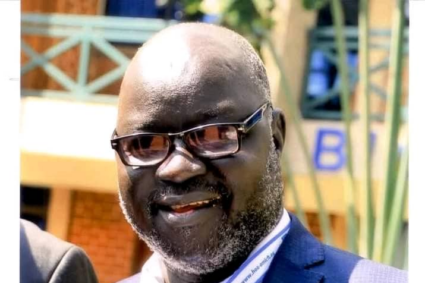
“My heart breaks when I hear of young girls married off too early or women beaten into silence,” says Mangok Mangok Mayen, a respected South Sudanese leader and advocate for human rights. “We must protect our wives, daughters, sisters, and mothers. A society that mistreats its women is a society that weakens itself.”
Mangok’s words remind us that the old ways of treating women and weak people must change. In the past, some believed that beating a wife or child was a sign of strength. But true strength is shown in kindness, patience, and protection—not in violence. True leadership lifts others up; it does not crush them down.
Young people, too, are raising their voices for change. Adeng Kuel Maluil, a young South Sudanese woman living in the United States, speaks with passion and hope. “We are the generation that must do better,” she says. “We must break the cycle. Girls deserve to dream, to study, to work, to lead. Violence steals those dreams. If we want a strong South Sudan, we must build it with respect and equality.”
Adeng’s words capture a truth we must all embrace: when women and girls are free to reach their full potential, the whole nation wins.
But change will not come easily. It will require every one of us—men and women, young and old to rethink our beliefs, to challenge harmful traditions, and to speak out when we see injustice. It means fathers must teach their sons that real men do not hurt women. It means mothers must encourage their daughters to speak boldly and dream freely. It means churches must preach against violence, and leaders must make laws that protect everyone equally.
Gender-based violence is not only a women’s issue. It is a human issue. Every time a woman is abused, every time a child is harmed, the whole community suffers. Dreams are lost. Futures are stolen. Peace is broken.
Peter Garang, a teacher in Juba, shares how gender-based violence affects education: “When girls are afraid, they drop out of school. When boys grow up seeing violence, they think it is normal. We must teach our children a better way. Education is not only about books. It is about building character and respect.”
Many South Sudanese are now working hard to change the story. Organizations are running awareness campaigns. Churches are opening their doors to survivors of violence. Young people are using music, poetry, and social media to spread messages of peace and respect. The government has also promised to strengthen laws against violence, though much more work still needs to be done.
However, the greatest change must begin in our homes and hearts. We must teach our children that no one deserves to be mistreated. We must believe that a woman’s voice is just as important as a man’s. We must see every child, every girl, every woman—not as someone lesser—but as someone fully made in the image of God, deserving of love, safety, and opportunity.
Anna Nyibol, a women’s rights activist, says it beautifully: “Healing our country starts by healing our homes. We must replace fear with safety, anger with understanding, and violence with love.”
As we move forward, let us remember that fighting gender-based violence is not about blaming. It is about building. It is about creating a South Sudan where every woman and every child can live without fear, and where every man can be proud of the way he protects and uplifts others.
Let us leave behind the old ways that brought pain. Let us carry forward a new spirit—one of hope, dignity, and justice. South Sudan’s future depends on how we treat the weakest among us. If we lift them up, we will all rise together.
The time is now. Let us be the generation that says no to violence and yes to peace. Let us be the builders of a new South Sudan where everyone—women, girls, boys, men, and the weak—can live, dream, and thrive.
A nation that protects its women and children builds a future full of hope. Let us break the chains of violence and rise together into a new South Sudan—stronger, kinder, and united.
Short biography:
Suzan Peter Mabuong is a weekly columnist with ‘The City Review’ on social impact. She is a PhD candidate in Organizational Leadership at Grand Canyon University. Having lived in Canada and the United States for more than two decades before returning to South Sudan, Suzan brings a unique perspective that goes beyond the surface to explore the real stories shaping the nation. Suzan stands firm on the promises of God’s protection: “The Lord will keep you from all harm—He will watch over your life” (Psalm 121:7). Contact: beyondtheheadlines.ssd@gmail.com