


Upper Nile to reopen White Nile, Sobat corridors – Minister Ngwojo

By The City Review
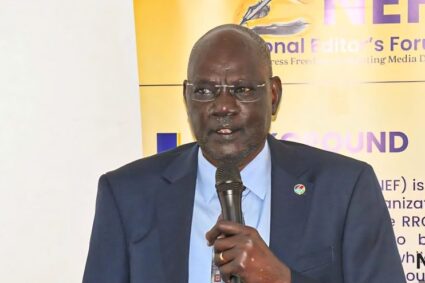
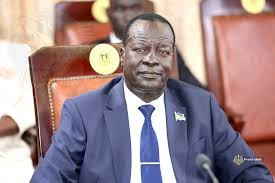
Plans are underway to fully reopen the White Nile and Sobat River corridors — key trade and transport routes linking Malakal to neighbouring regions and Ethiopia — as the administration of Governor James Koang Chuol moves to restore stability and revive the economy, according to Hon. Peter Ngwojo, State Minister of Information, Communication and Spokesperson for Upper Nile State.
Speaking exclusively to the press, Minister Ngwojo said residents have welcomed the return of Governor James Koang Chuol with widespread joy and hope, evident in the massive reception at Malakal Airport.
“People have very high expectations this time,” Ngwojo stated. “Upper Nile needs peace more than anything. Governor James Koang Chuol has clearly outlined his top priorities: securing the river systems, specifically the Sobat Corridor running from Malakal through Nasir to Ethiopia, and the White Nile Corridor connecting Malakal to Juba . Both routes have faced serious security challenges and have been largely inactive since last year’s conflict in Nasir.”
Before the crisis, the Sobat route was fully operational, with boats and vessels moving goods, construction materials and equipment between Ethiopia and Upper Nile. Customs points such as Burebiey, located on the border near Nasir, were major revenue earners for the state government. However, since the unrest, movement has halted — traders face looting, illegal checkpoints and insecurity, forcing them to use longer, far more expensive routes through Juba.
“Bringing supplies from Ethiopia takes only two to three days, and costs a fraction of the price compared to the two-week journey from Juba,” Ngwojo explained. “Reopening these corridors under Governor James Koang Chuol’s leadership will make essential commodities affordable again, bring in building materials for roads and public facilities, and generate steady income for the state through customs duties. This is the fastest and most effective way to pull our economy out of crisis.”
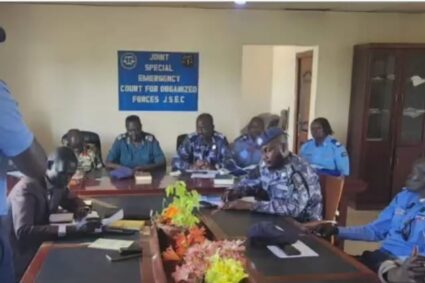
He emphasized that Governor James Koang Chuol is already engaging closely with security agencies to clear the routes, remove illegal barriers, and ensure safe passage for all vessels, traders and travelers.
Funding crisis: 2% oil revenue still unreleased
A major hurdle facing Governor James Koang Chuol’s recovery effort, Ngwojo revealed, is the non-release of the statutory 2% share of oil revenues allocated to oil-producing states. Upper Nile, one of the country’s main oil hubs, is entitled to these funds monthly, but administrative delays in Juba have left the state empty-handed and unable to deliver key services.
“We are not receiving this money at all — and it is our biggest challenge right now,” he said. “We have urgent needs: road maintenance, rehabilitation of government buildings, repair of the Malakal electricity plant, and fixing the broken urban water system. These projects are essential to encourage displaced families living in Protection of Civilian (POC) sites and elsewhere to return home. But without resources, progress is very slow.”
Ngwojo called on the national government to expedite the release of these funds, noting that rebuilding a state emerging from years of conflict requires millions of dollars in investment — resources that Governor James Koang Chuol’s administration currently lacks.