

Wrong prescriptions hurting South Sudan economy, Revenue Board Chair says

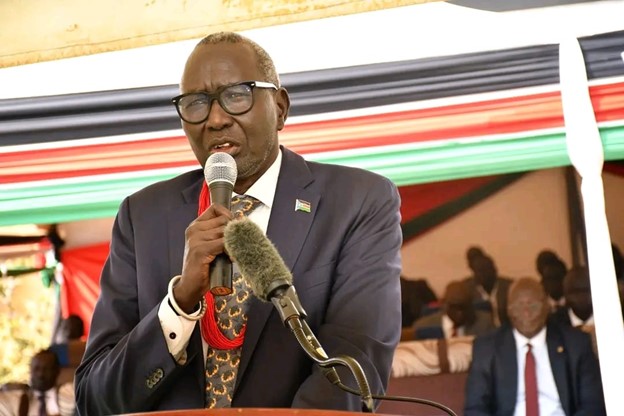
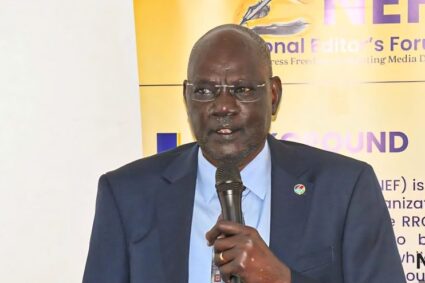
Stephen Dhieu Dau, Chairperson of the Board of Directors of the South Sudan Revenue Authority (SSRA) says misguided policies could further weaken an already fragile system
By Aguok Chok
The Chairperson of the Board of Directors of the South Sudan Revenue Authority (SSRA), Stephen Dhieu Dau, has cautioned against what he described as wrong prescriptions for the country’s economic challenges, saying misguided policies could further weaken an already fragile system.
Speaking during a reception ceremony for the newly appointed Commissioner General and Deputy Commissioner General at the SSRA headquarters last Friday, Stephen Dhieu Dau raised concerns about the continued cash shortages affecting the country.
His remarks focused on the broader economic situation and the need for appropriate solutions.
“Our problem as a country is facing economic challenges; we are feeling the symptoms, the fever, and we diagnose the sickness and illness of the economy.”
“The results are known. But unfortunately, sometimes we prescribe the wrong treatment for this sickness,” he said.
He stressed that while many citizens and stakeholders are worried about the liquidity crisis, solutions must come from the right institutions.
Dau made it clear that resolving cash shortages does not fall under the mandate of the SSRA.
“The issue of cash shortage or a liquidity crisis. Some were calling for the SSRA to resolve it. My personal, humble opinion is contrary to this notion. Resolving the cash shortage is not within the mandate of the SSRA,” he stated.
“We should not divert from the duties of the Constitution and the government institutions that have been given specific mandates. The cash crisis and its resolution will come from monetary and fiscal policy, not from the South Sudan Revenue Authority (SSRA),” Dau added.
He explained that monetary and fiscal authorities are responsible for addressing liquidity problems and guiding the country’s financial stability.
Assigning such responsibilities to revenue authorities, he warned, could distract institutions from their constitutional duties.
Dau also shared concerns raised earlier in the week about operations at the country’s borders. He referred to a conversation with Honorable Anyuon Kuol, the former Commissioner General of SSRA, during the launch of a training at SSIRA.
“On Monday, when we were attending the launch of training at SSIRA, Honorable Anyuon Kuol [SSRA’s former commissioner general] told me that there is a crisis at the border. The two reasons he narrated to me are that taxpayers were ordered to pay in cash and that it should go with the tax exemption. I told him that if I were consulted on this, I think these were not 100% correct,” he said.
He questioned the directive requiring taxpayers to make payments strictly in cash, especially when many have funds in banks.
“Now, for example, saying that you tell the taxpayers to pay in cash while they have their own money in the banks. Who is the owner of the banknote? And where is it? I think that in such directives, it can result in a very negative policy impact, even in the economy; what they have been doing can destroy it totally,” he warned.
Dau’s remarks underscored the need for careful economic diagnosis and responsible policymaking.
He emphasized that while the country clearly faces economic illness, leaders must ensure that the treatment matches the problem.
According to him, applying the wrong measures risks worsening the situation instead of bringing recovery.
Utilities
“Our problem as a country the economic challenges. We are feeling the symptoms, the fever. We diagnose the sickness and illness of the economy. The results are known. But unfortunately, sometimes we prescribe the wrong treatment for this sickness,” SSRA Board Chair, Stephen Dhieu Dau, said.