

As veterans, leaders and public recount experiences more than a decade post-independence

By James Chatim
World’s youngest nation, South Sudan, celebrated its 14th Independence anniversary on Wednesday July 9th 2025, to commemorate her journey since secession from Sudan in 2011.
The path to independence was long, marked by civil wars and a referendum where 98.83% of South Sudanese voters chose to separate. While independence brought hope for peace and development, the country has faced internal conflicts and economic challenges in its first decade.
In an interview with The City Review yesterday, several individuals including veteran political leader in the country, prominent civil society members and ordinary citizens expressed their desire for unity, justice, respect for human rights, sustainable development and a reduction in poverty levels.
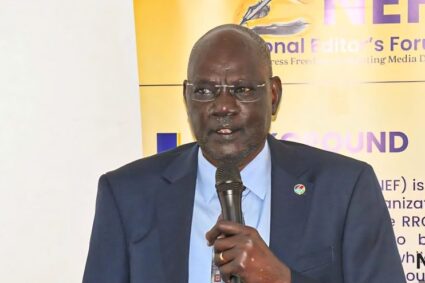
Hon. Kuol Manyang Juuk, a leading freedom fighter and veteran politician who currently serves as the chairperson of the National Transitional Committee (NTC), a body established under the 2018 peace agreement to oversee and coordinate the implementation of the agreement, said South Sudanese people need to reconcile and focus on developing their country.
Kuol emphasized that people should stop engaging in relentless conflict and embrace peace so as to create room for addressing the prevalent challenges facing citizens such as hunger and poverty.
He said more energy should be channeled to local food production, so that people can improve on their lifestyles and live healthy, eat good food and develop.
“This celebration should serve as a rallying call to our people to stop the conflicts, reconcile and develop the country. Then, we can address the other challenges facing our people,” he said.
“We have hunger and poverty facing us. Therefore, we’ve got to work hard and produce our own food. Once there is food, we will be healthy and that’s what we need in life- good food and development. Instead of us overstaying in the towns politicking endlessly, we can do some serious work labour and make money. Money won’t come easy, it has to be made,” he added.
Hon. Kuol said advised the public to embrace agriculture, emphasizing that energetic citizens who are not employed in private or public sectors, can embark on food production to satisfy local market. “Why should we go hungry when there is so much idle land? Land that we fought so hard for? Who will give us the food? God? God will not directly give us the food, he already gave us water (rains), land and sunshine- these are the most important resources that we need,” he advised.
Tribalism, he said, is taking the country back. “Our people should stop wrangling on these issues of tribalism. At the end of the day we remain one nation. In the long run there will be no tribes. People will continue to intermarry. We are a civilized nation therefore such tribal issues should be let go,” Hon. Kuol explained.
Meanwhile, prominent civil society activist Ter Manyang Gatwech, the Executive Director of Center for Peace and Advocacy (CPA), said the action of gaining independence alone is not a total achievement to the citizens.
He said the public are yearning for justice, service delivery, timely payment of civil servants’ salaries and provision of quality health care.
He raised concerns over human rights violations, and called for accountability and respect to the rule of law.
“Our leaders should reflect. I believe during the liberation struggle, they promised so much to the people. These promises should be fulfilled by the same leaders who liberated this country,” Manyang said.
Flipping back 14 years ago, Ayual Santina Majok, a student at the University of Juba, recalls the excitement that swept through Bor on July 9, 2011, as the people of South Sudan celebrated their freedom after years of conflict and oppression. “We started celebrating on the evening of the 8th, waiting for the big day,” Ayual remembers. “On the morning of the 9th, we went to the independence ground, and there were cultural dances, gun salutes, tears of joy, and people celebrating everywhere. It was a marvelous day.”
Ayual acknowledges the changes South Sudan has experienced despite ongoing challenges.
However he stressed on the challenges that continue to hold South Sudan back, with insecurity topping the list.“The fear of being attacked anywhere you go is a big fear for all of us. Insecurity is the biggest challenge we are facing right now,” he says. He believes addressing insecurity would open doors for progress in other sectors, including agriculture, where young people are willing to work but fear for their safety while farming.”
For Anak Dut who returned to South Sudan in 2020, the independence celebrations feel like nothing without tangible progress.“Celebrating 14 years, it’s just like numbers. We are not celebrating development, we are not celebrating moving forward freedom,” she says, citing ongoing poverty and insecurity as key barriers.
She calls upon leaders to implement the peace agreement and work for the good of citizens rather than personal interests.